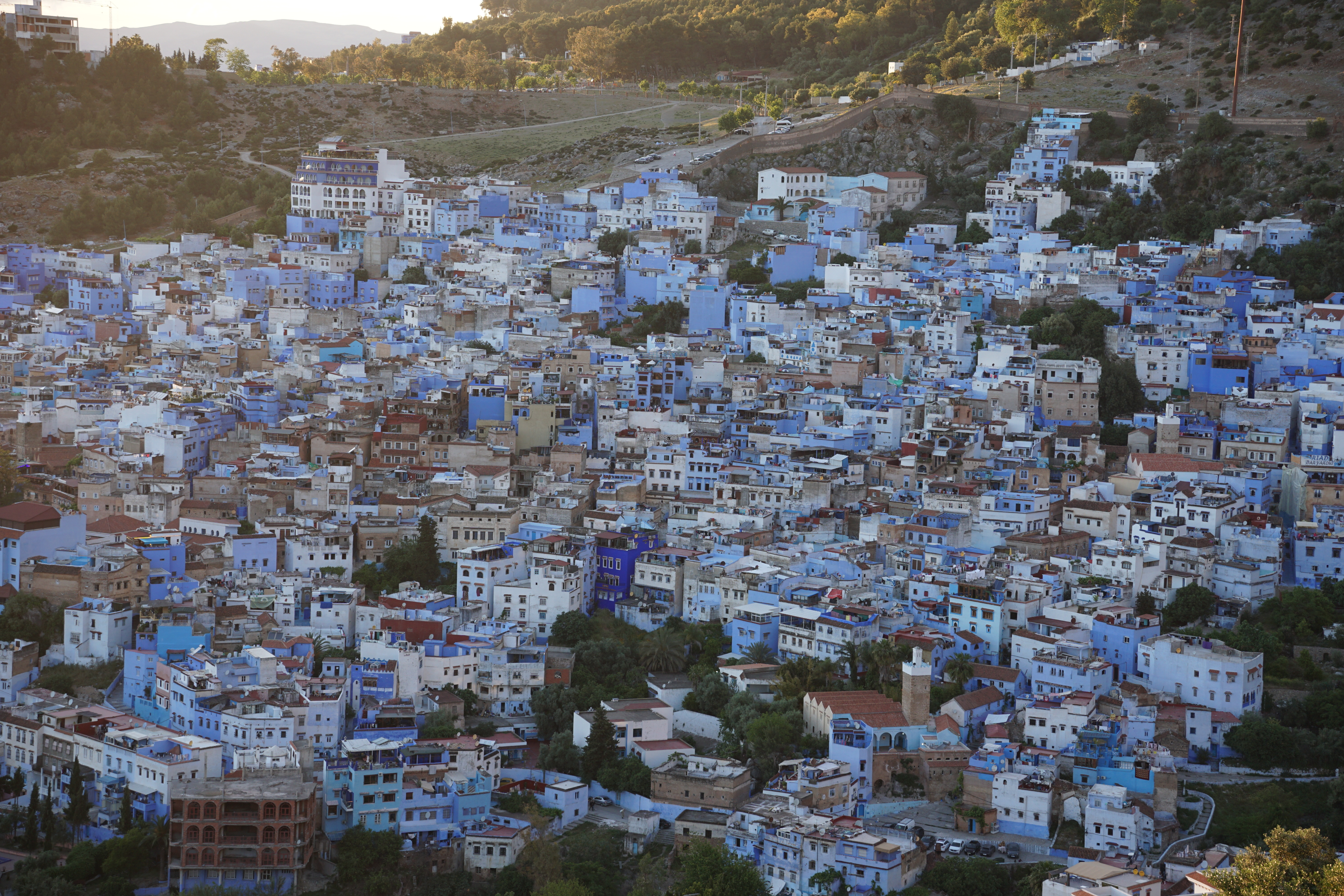
As we were preparing for this trip, people kept asking us the same question: Why Morocco?
The honest answer? Instagram. A few years ago I stumbled across photos of Chefchaouen — the so-called Blue City tucked into the Rif Mountains — and it lodged itself somewhere in the back of my brain. Narrow alleyways washed in every shade of blue and indigo, flower pots spilling over doorways, cats lounging in the sun. It looked like something out of a dream. Then I fell down a rabbit hole of images from Fes and Marrakech, and that was it. Morocco moved from "someday" to "let's book it."
What we hadn't fully appreciated until we arrived: Morocco would be our first time setting foot on the continent of Africa. That felt significant. And Morocco, it turns out, is a magnificent introduction.
After a little research we decided to go with a small group tour instead of trying to do this trip on our own. We chose G Adventures' Northern Morocco: Chefchaouen, Fes & the Rif Mountains tour — a 9-day small group itinerary running from Casablanca to Marrakech. Here's how it all unfolded.
Day 1: Casablanca — Landing in Morocco
We landed in Casablanca a day before the G Adventures tour began — our usual M.O. for these types of trips. It gives us a buffer in case there are any flight delays and allows us to rest and start to acclimate to a new destination. One of the nice things about starting in Casablanca was the direct flight from Washington, D.C. on Royal Air Maroc, and arriving early gave us time to shake off the jet lag before the real adventure started.
Casablanca is a city that defies easy characterization. French colonial architecture stands alongside modernist towers and traditional Moroccan craftsmanship, and yet it feels unmistakably Moroccan. The city hums with commerce and energy.
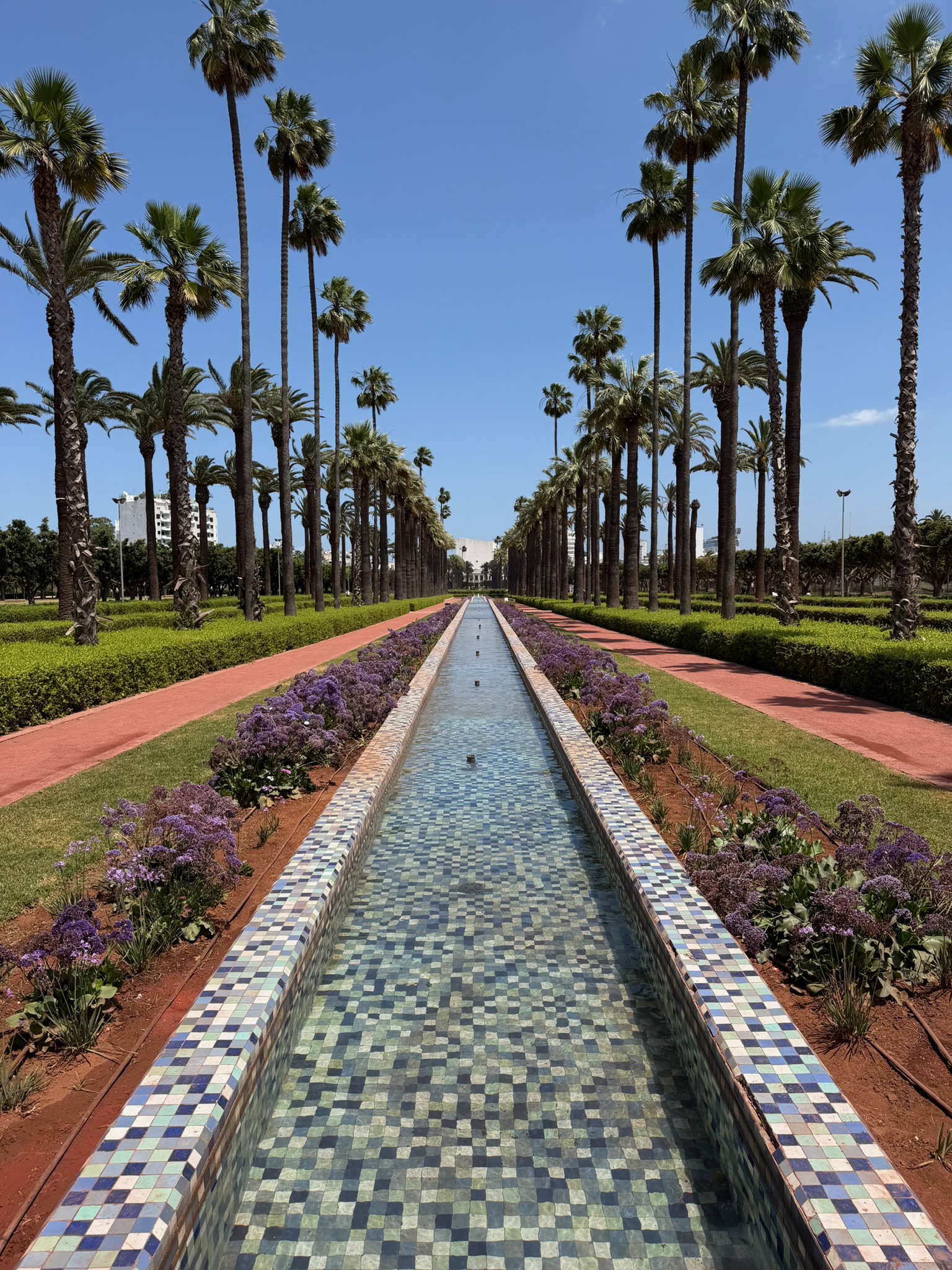
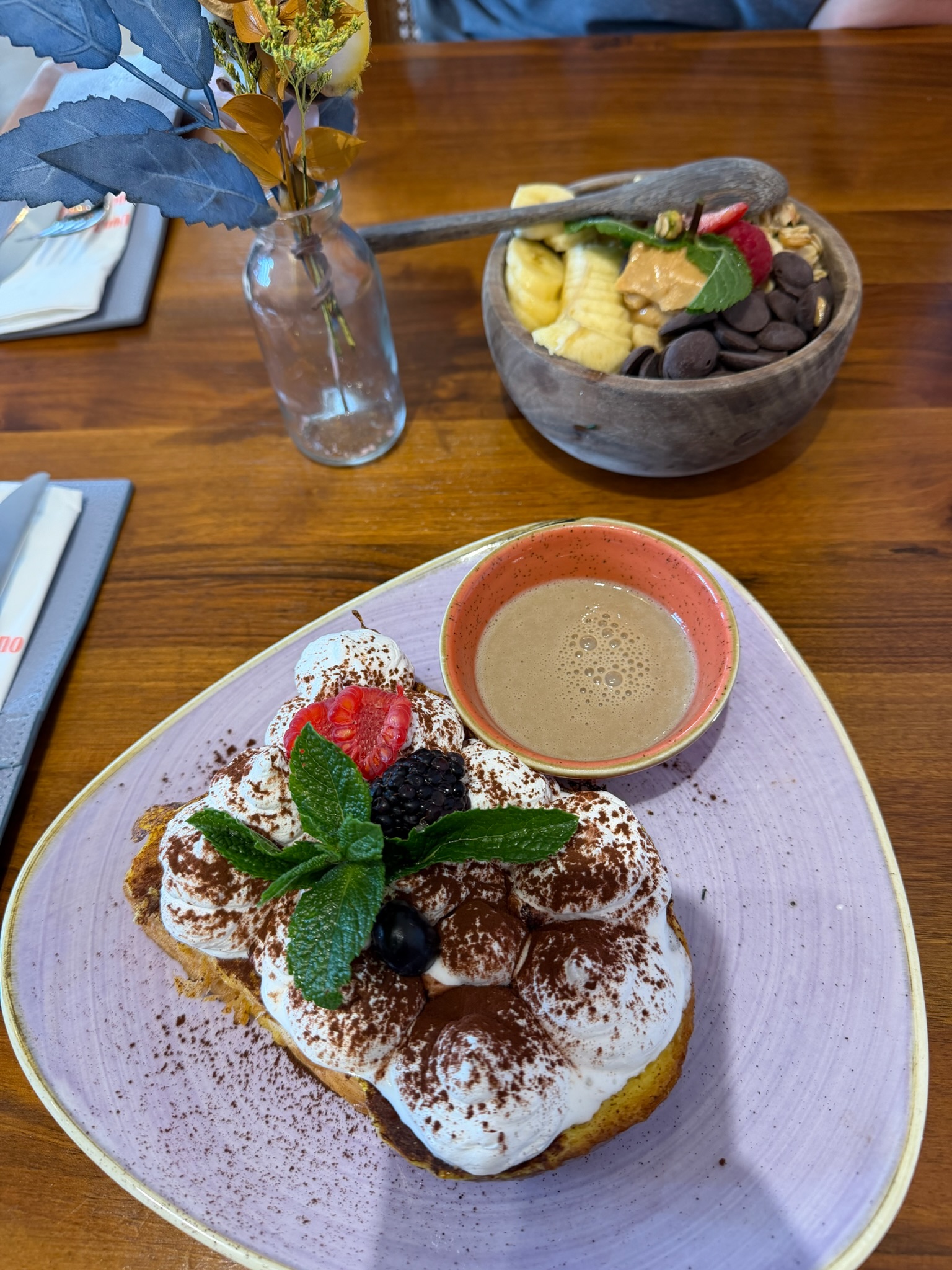
We kept the first day low-key and close to our hotel — exactly the right call after a transatlantic flight. A walk through the Arab League Park, a beautifully kept green space in the heart of the city, helped us stretch our legs and get our first real look at Casablanca street life — which is quite interesting to put it lightly. All I'll say is that if you can drive in Morocco, you can drive pretty much anywhere in the world. For brunch we found Holy Brunch, a lovely spot that eased us in gently. The tiramisu french toast was chef's kiss.
We ventured into the medina but ended up not spending much time in there; it was getting to be late afternoon and we were starting to fade fast. To be honest, after seeing the Habous Quarter and the medinas in other cities, we could've skipped Casablanca's medina and not missed anything.
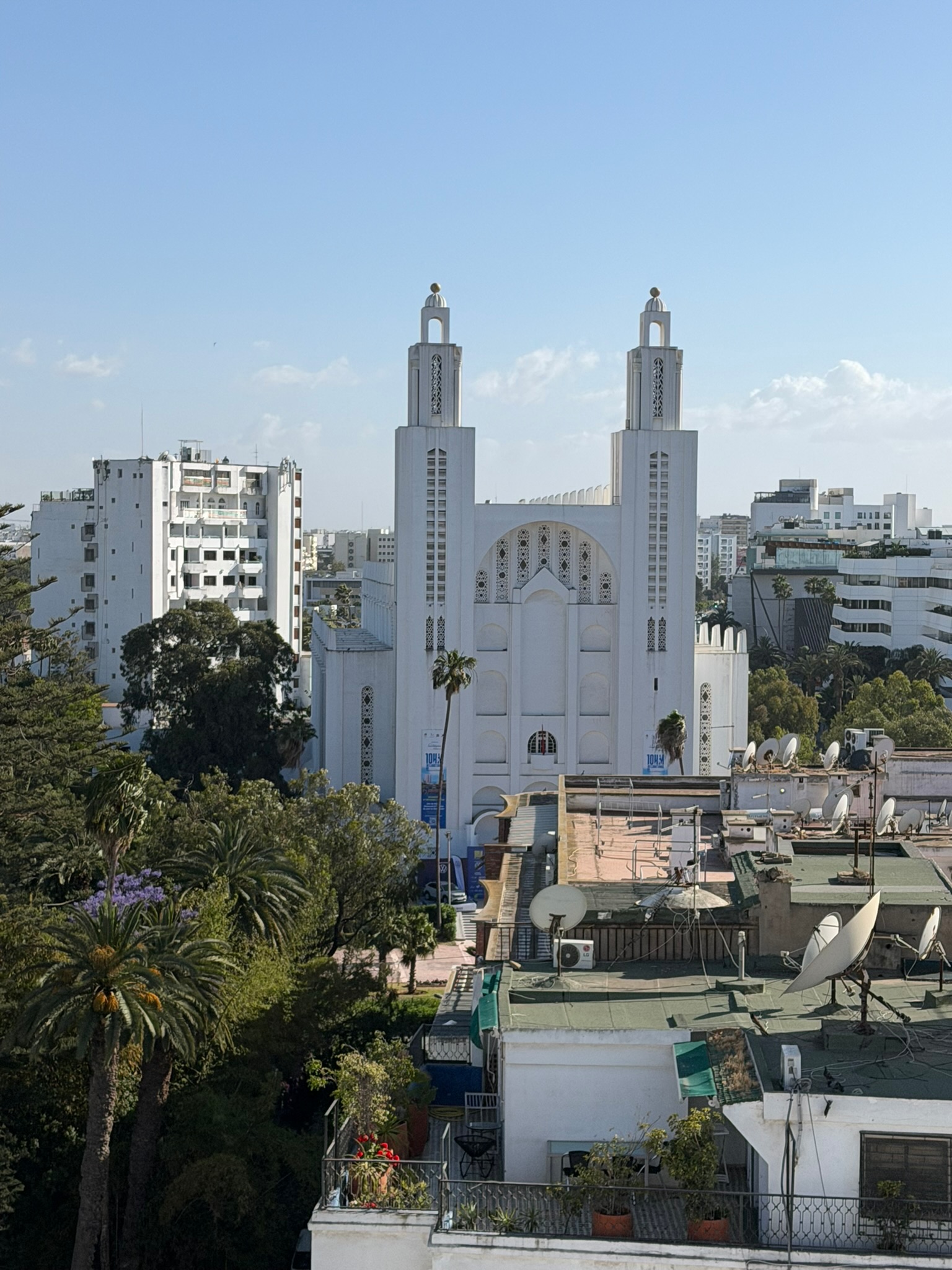
That evening we had dinner at our hotel's rooftop restaurant (we were running on fumes at that point), which looks out over the Sacred Heart Cathedral — a striking French Gothic with Art Deco influence building now used as a cultural center. Watching the city settle into evening from that rooftop, over a good meal, felt like a perfect first night on the African continent.
Practical tip: While waiting to collect your luggage at baggage claim, visit the currency exchange to get Dirham. Cash is still widely used over credit cards in Morocco and the Dirham is a closed currency — you cannot order it from your bank ahead of time.
Day 2: Casablanca — Hassan II Mosque & the Tour Begins
Rested and ready, we spent our second day in Casablanca properly exploring — with a little expert help. We booked a private guide through Tours by Locals and our guide, Issam, turned out to be one of the highlights of the entire trip. Patient, knowledgeable, and genuinely passionate about sharing his culture, he did a beautiful job of introducing us not just to the city but to Morocco itself — its history, its people, and its faith.
Our first stop was the Hassan II Mosque, and it stopped us in our tracks. One of the largest mosques in the world, it sits right on the Atlantic coast — built so that worshippers pray over the water. The scale is breathtaking, the craftsmanship extraordinary. An astounding 105,000 worshipers can gather there at once for prayers — 25,000 inside the mosque hall and another 80,000 outside on the promenade.
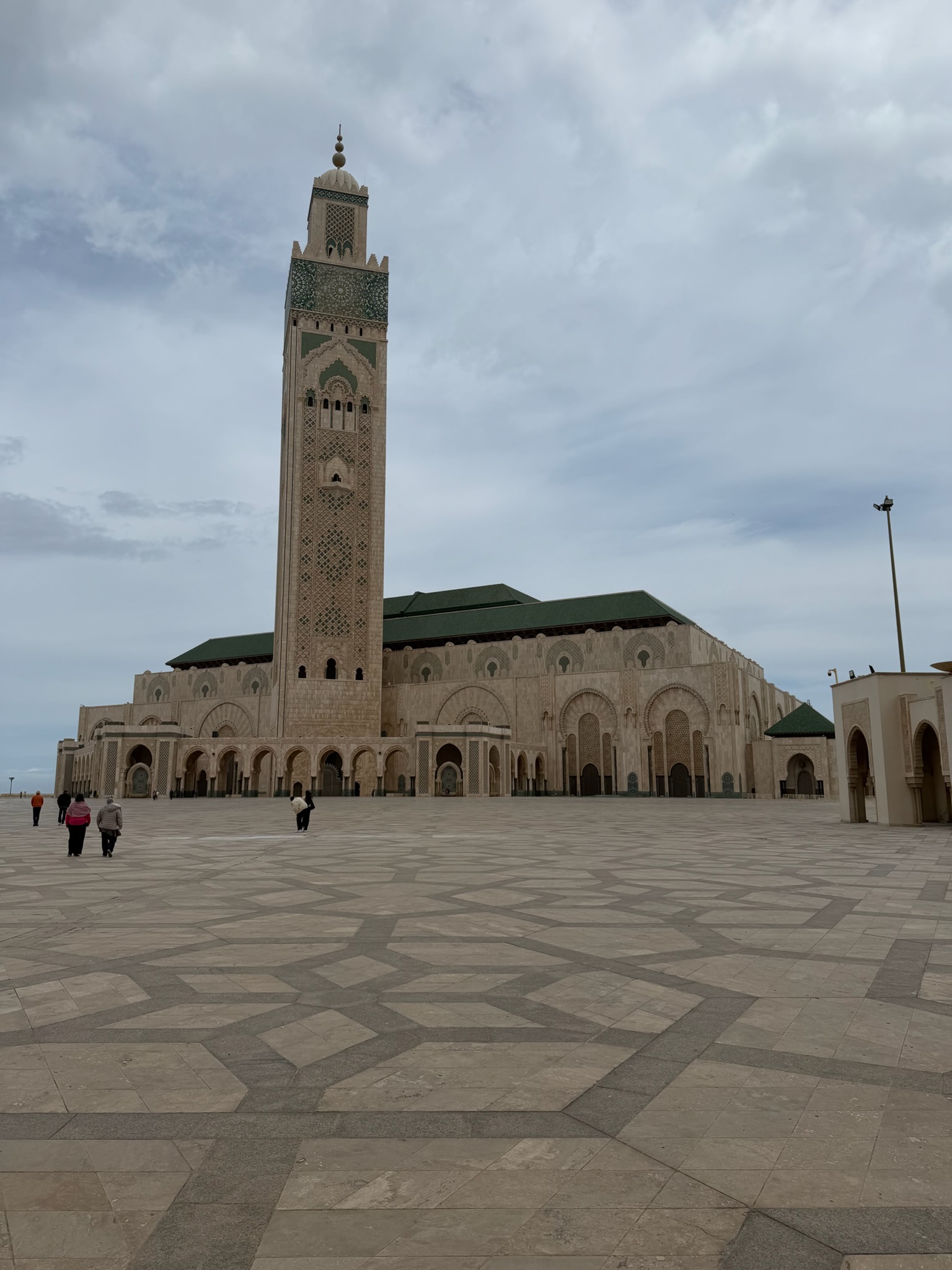
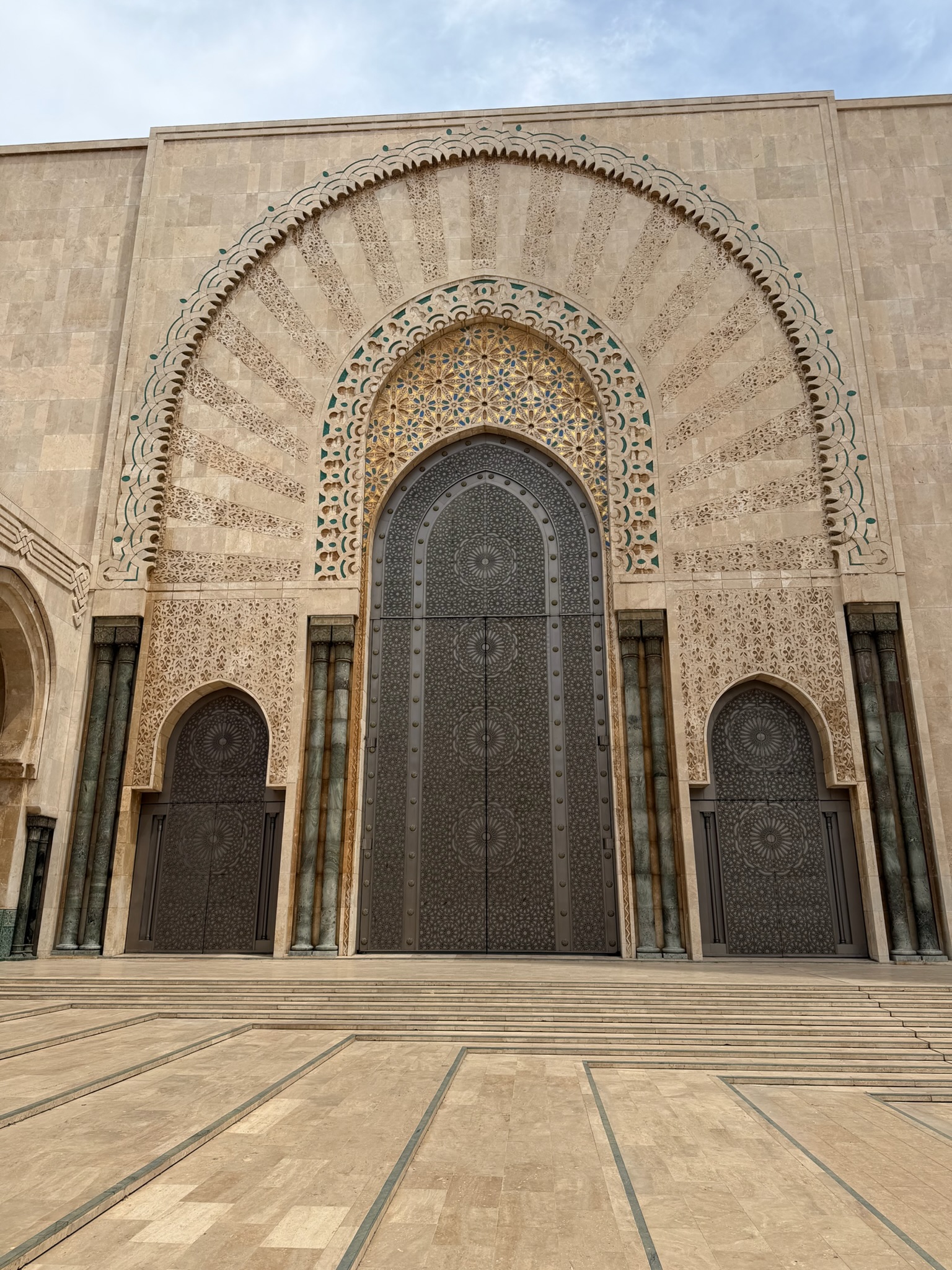
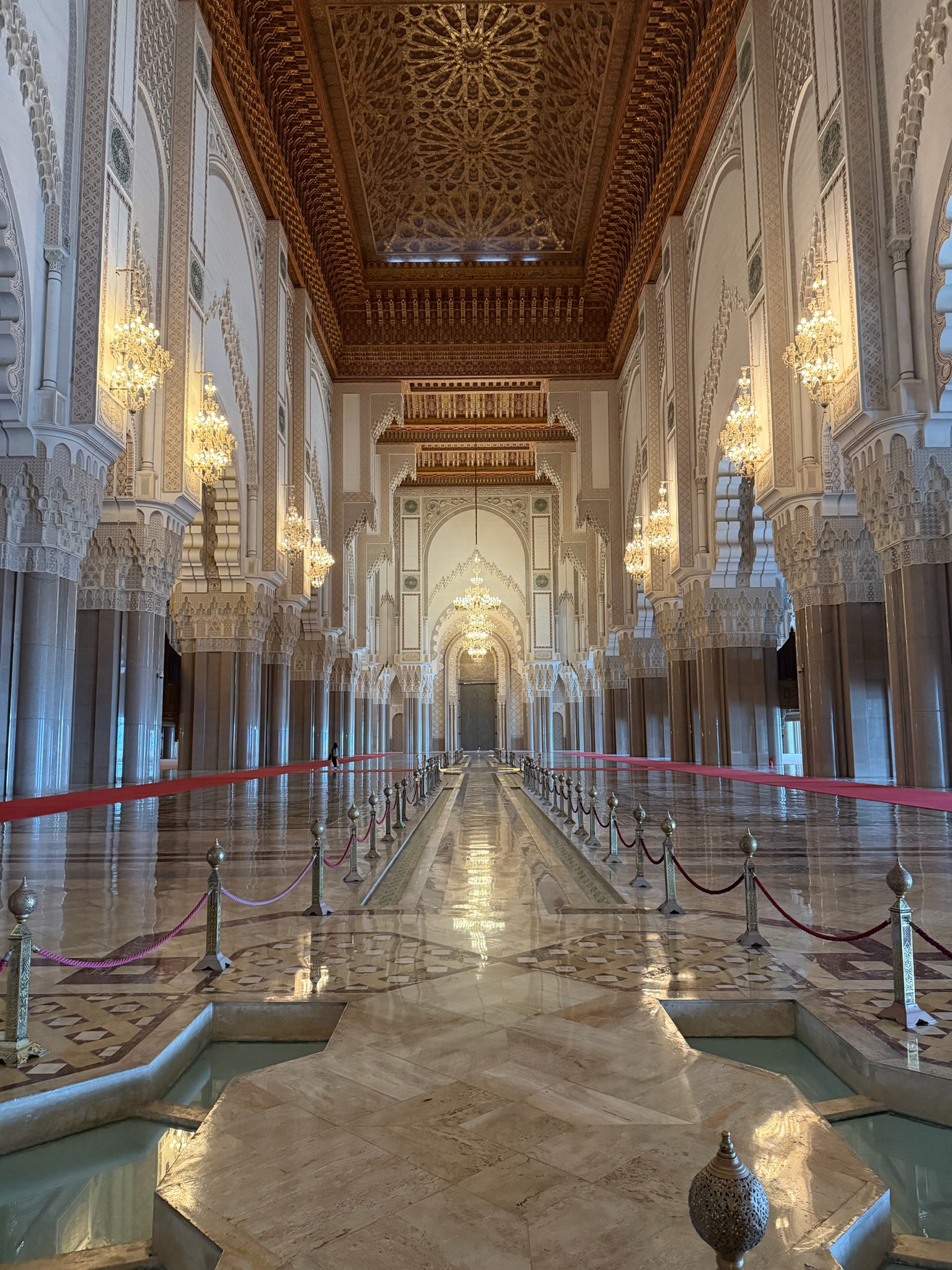
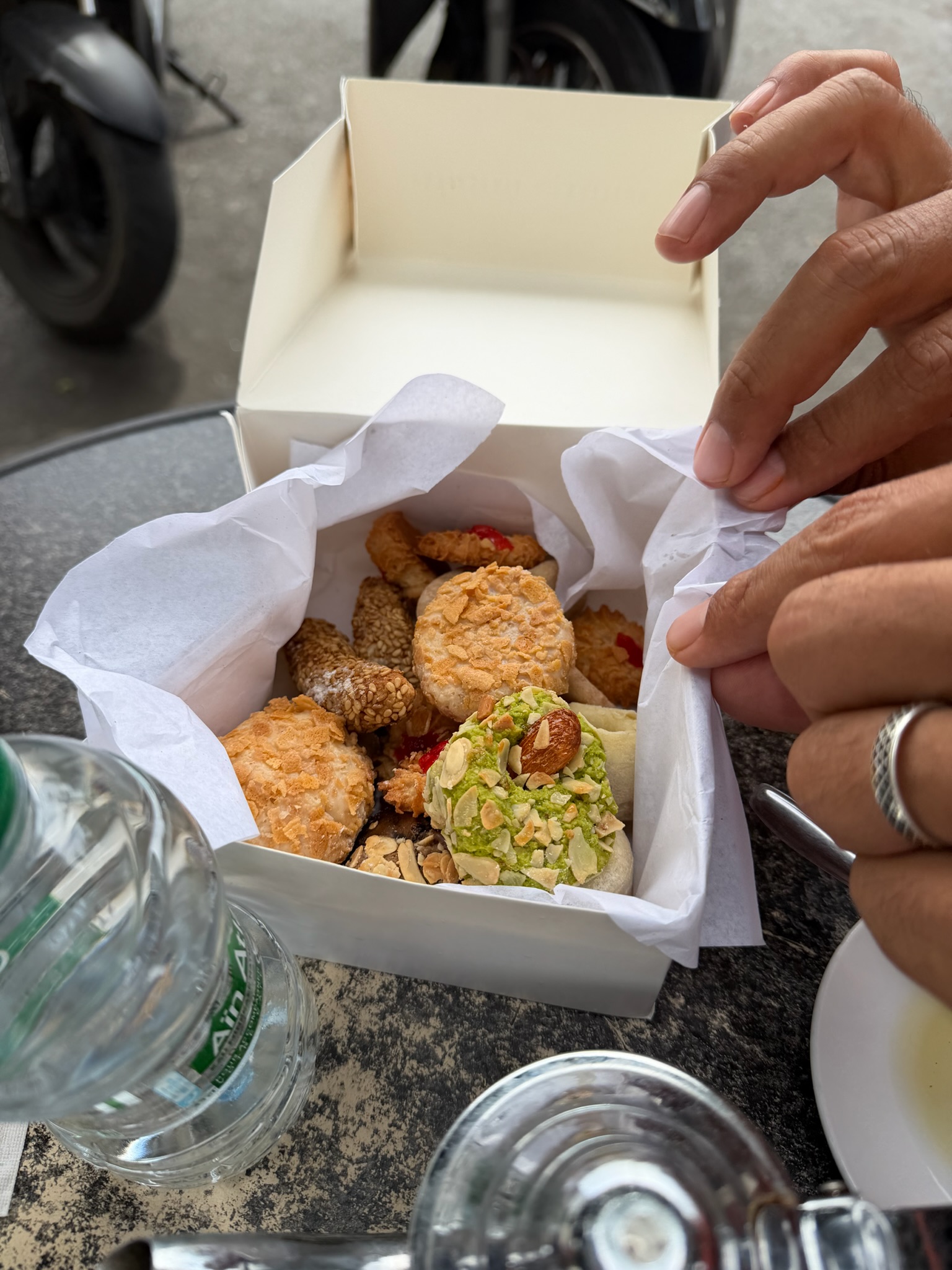
From there, Issam took us to the Habous Quarter — a neighborhood built by the French in a traditional Moroccan style, lined with artisan shops, markets, and bakeries. It was here that we had our first glass of Moroccan mint tea, and Issam showed us the proper way to pour. They pour the teapot from high up in order to create lots of bubbles and frothiness in the cup. As he explained to us, when a host is pouring tea, the more bubbles there are, the more welcome you are as a guest. He also introduced us to Patisseries Bennis Habous, a legendary local bakery, where we sampled pastries that were simultaneously unlike anything we'd had before and immediately felt like something we'd always known. Think pistachios, almonds, and orange blossom water.
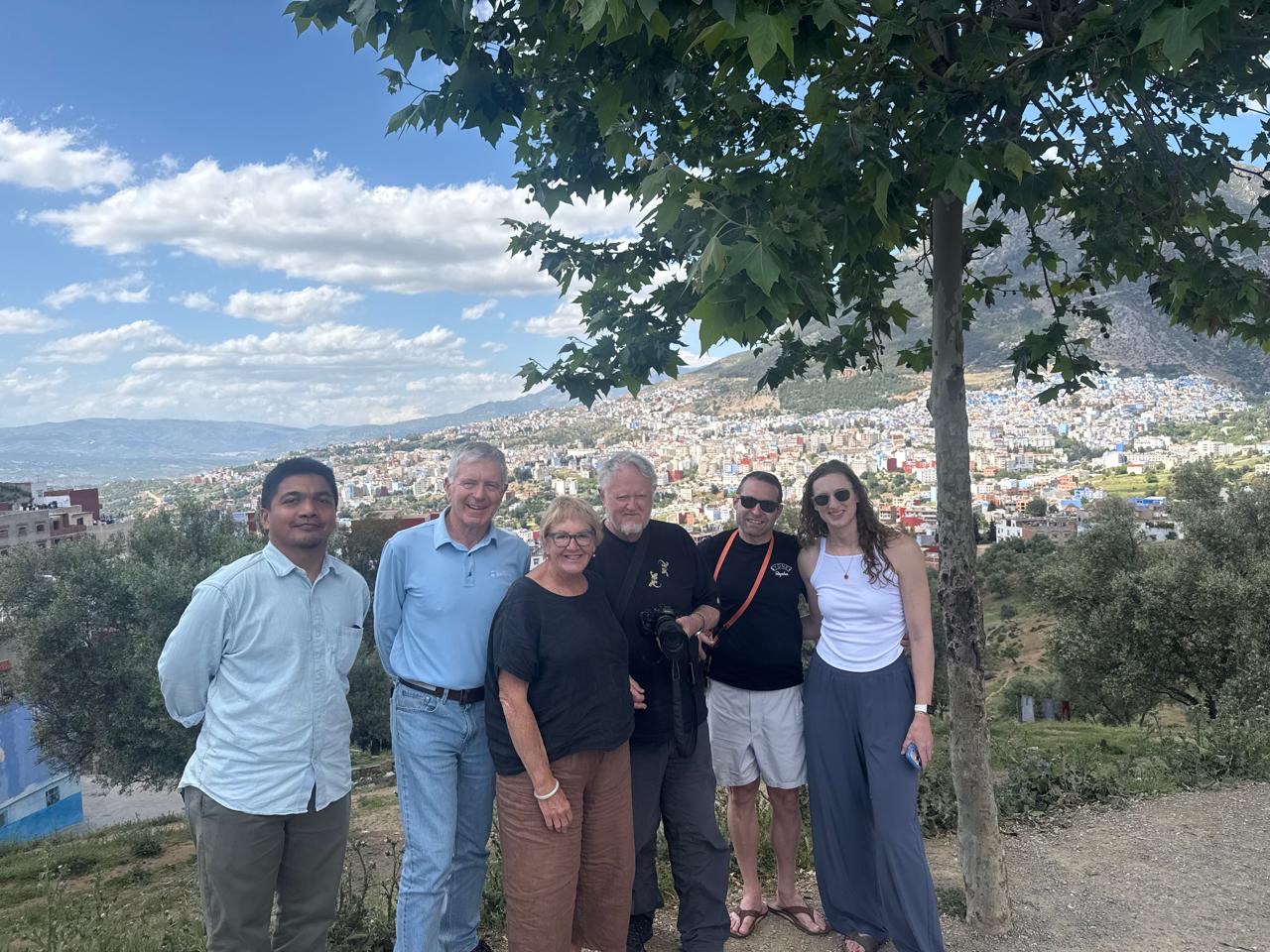
That evening, the G Adventures tour officially began. We met our CEO (that's G Adventures-speak for tour leader/guide) — Sophia — and the rest of our small group. One of the things we loved about this itinerary was just how intimate it was: only six of us total, which meant we moved efficiently, ate together like friends, and got a level of personal attention that a larger group simply couldn't offer.
Sophia's story is one we kept coming back to throughout the trip. Her mother had always dreamed of becoming a tour guide, but cultural expectations around women made that impossible. Sophia didn't let the same barriers stop her — she was the first female tour guide in Morocco for G Adventures.
Her story exists within a broader shift happening across the country. Morocco's current ruler, King Mohammed VI, was educated in Europe — earning a law degree in France and completing his doctorate at the University of Nice — and brought a notably progressive outlook to the throne when he ascended in 1999. One of his most significant acts was reforming Morocco's family code, known as the Moudawana, which had long placed women in a subordinate legal position. The 2004 reforms granted women equal rights in marriage and divorce, the right to self-guardianship, and stronger protections around property and child custody. Women have since grown more dominant in education and increased their employment rate — a generational shift that is still unfolding in real time.
Sophia is part of that shift. Watching her navigate cities, command the respect of local vendors and guides, and care deeply for every member of our group, it was impossible not to feel the weight and significance of that. Her mother's dream deferred became Sophia's dream realized. We gathered for a welcome dinner where we had our first tajine (more on that later), introductions were made, and the adventure officially began.
Day 3: Chefchaouen — The Blue City Delivers
If Day 2 was orientation, Day 3 was revelation. We drove north from Casablanca, stopping for lunch near Ouezzane, watching the landscape shift from coastal plains to rolling hills as the Rif Mountains came into view. And then — Chefchaouen.
No photograph fully prepares you for it. Every alleyway, every doorway, every staircase is painted in some shade of blue — sky blue, cobalt, powder blue, midnight blue. It's intentional, meticulous, and it is absolutely stunning in person.
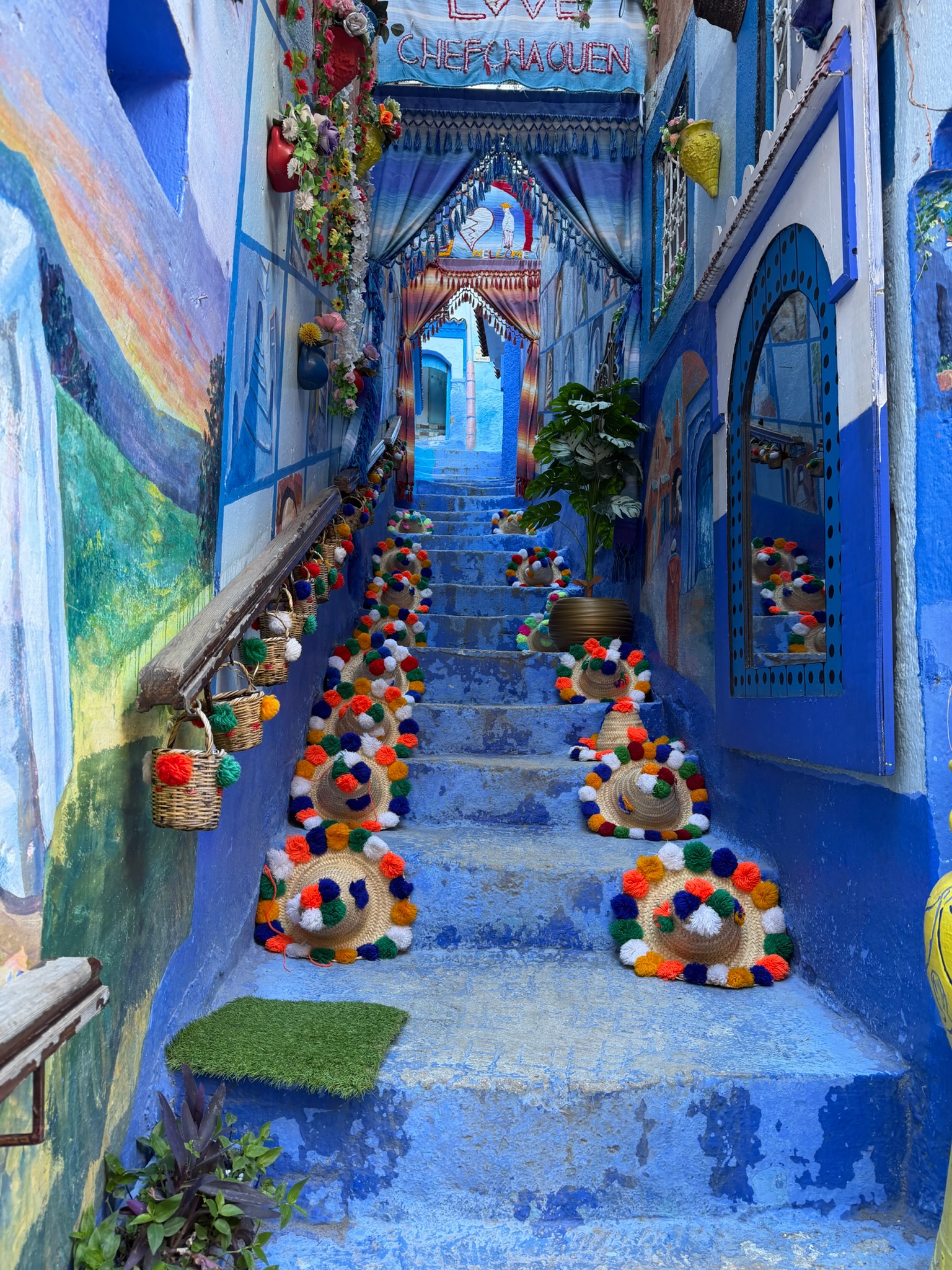
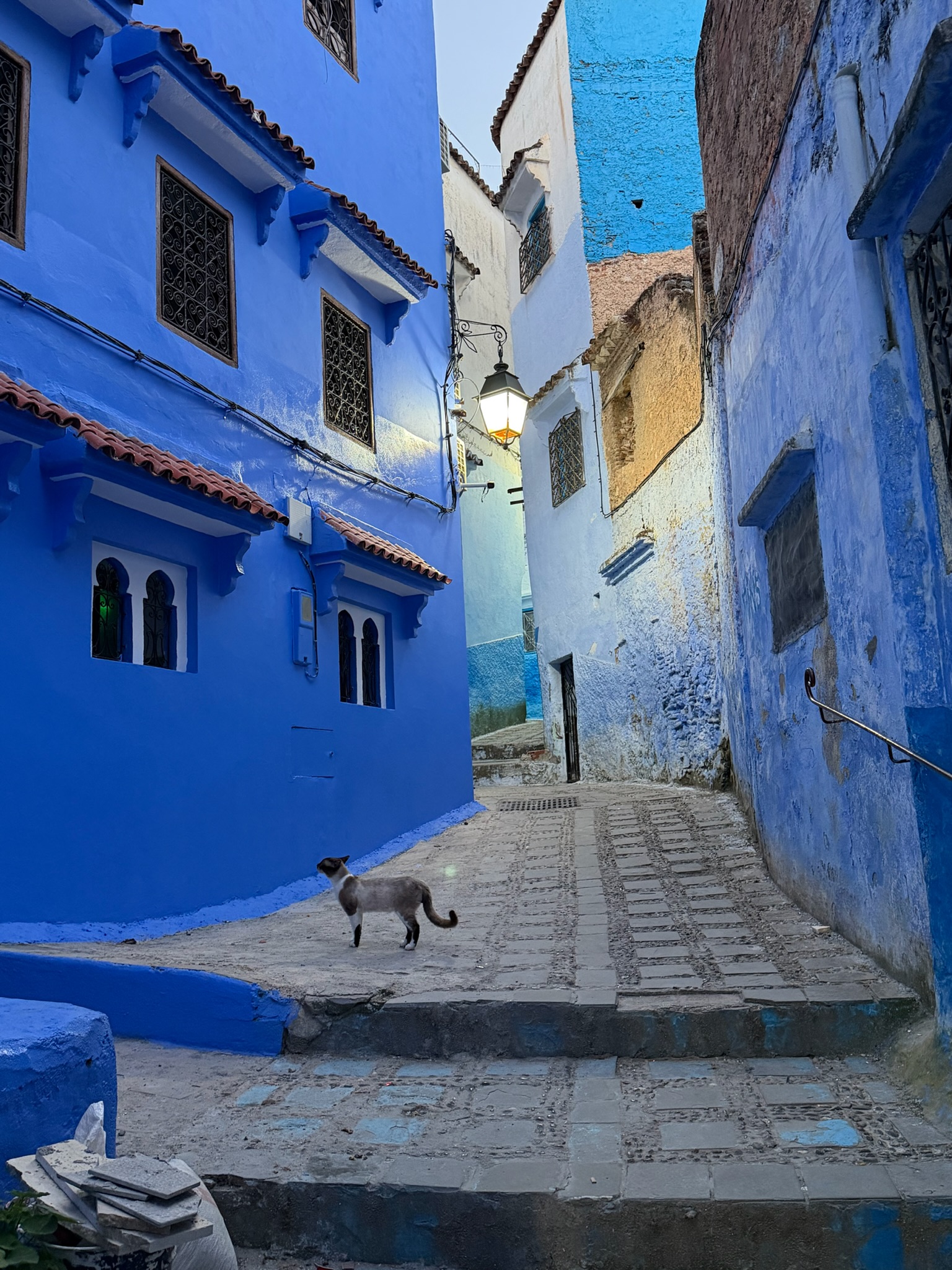
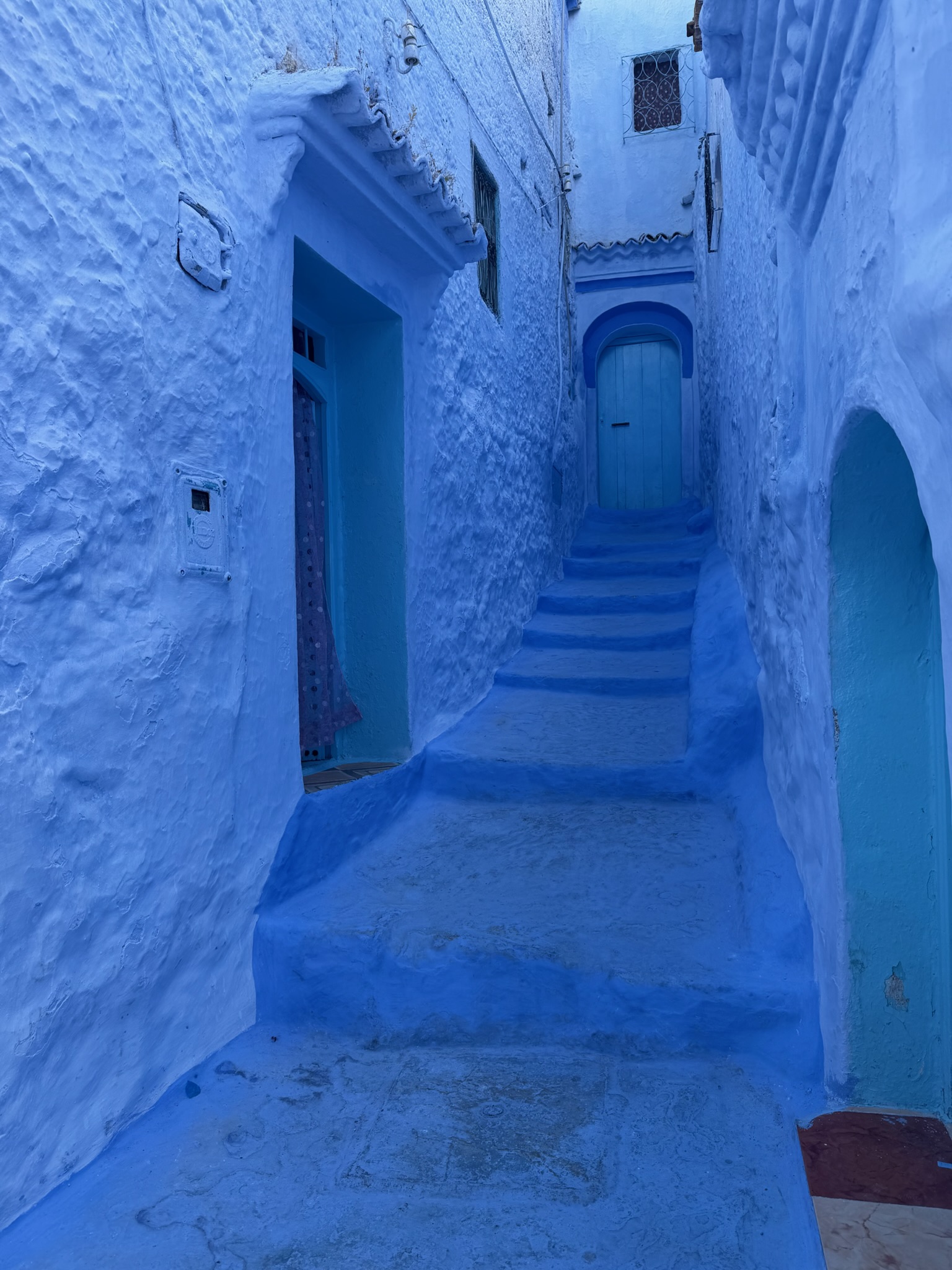
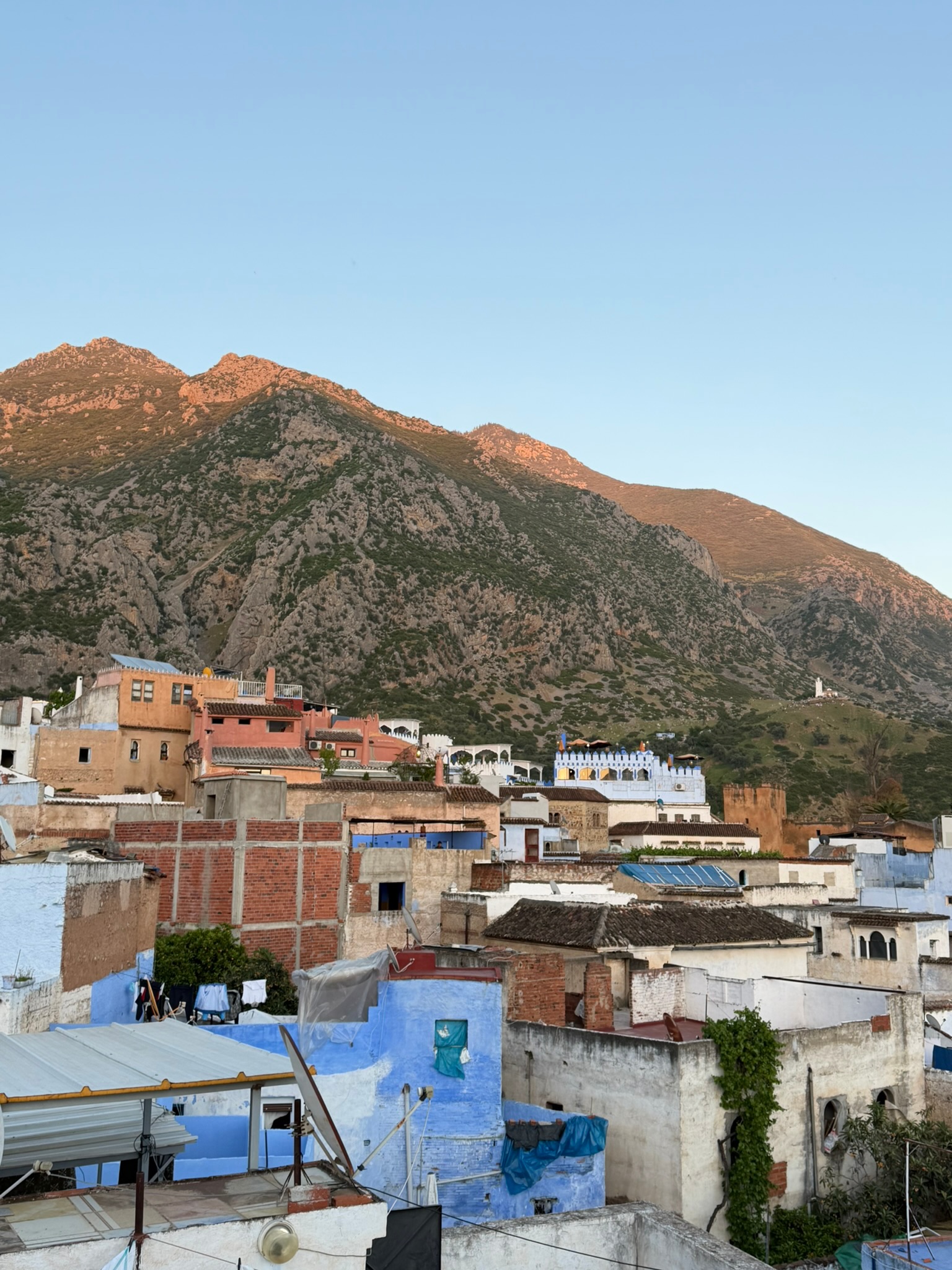
We checked into our riad-turned-hotel in the heart of the medina, then Sophia led us on an orientation walk through the medina to get our footing (you need it — the streets are gloriously maze-like). We enjoyed dinner with the group on the roof of Cafe Clock, watching the light fade behind the mountains and the blue of the city create its own ethereal glow in the twilight.
Day 4: Chefchaouen — Getting Lost on Purpose
G Adventures builds what they call an "OMG Day" into this stop, with a choice between two Rif Mountain hikes. But we made a different call: we spent the morning wandering the medina with our cameras, and we have zero regrets.
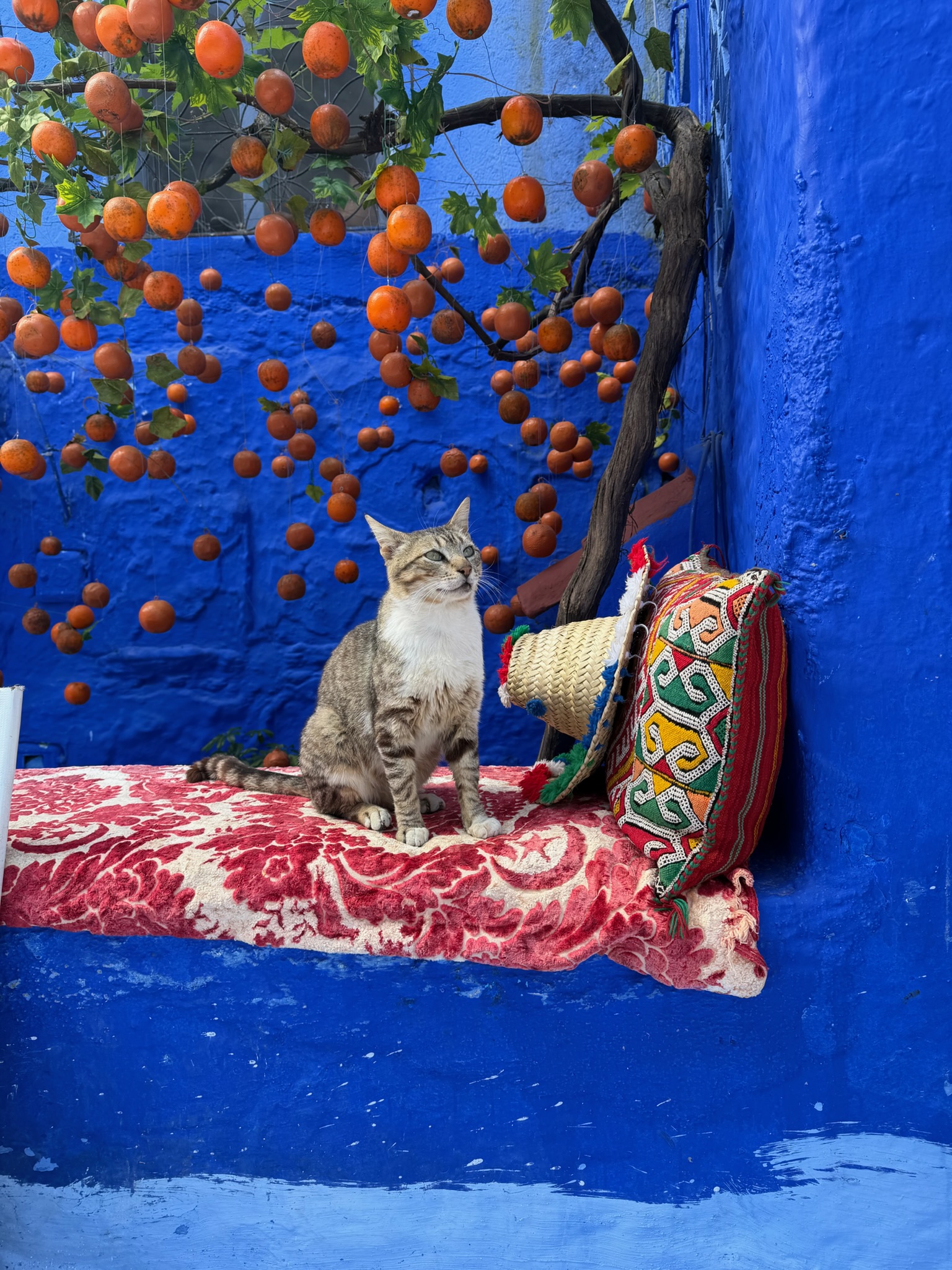
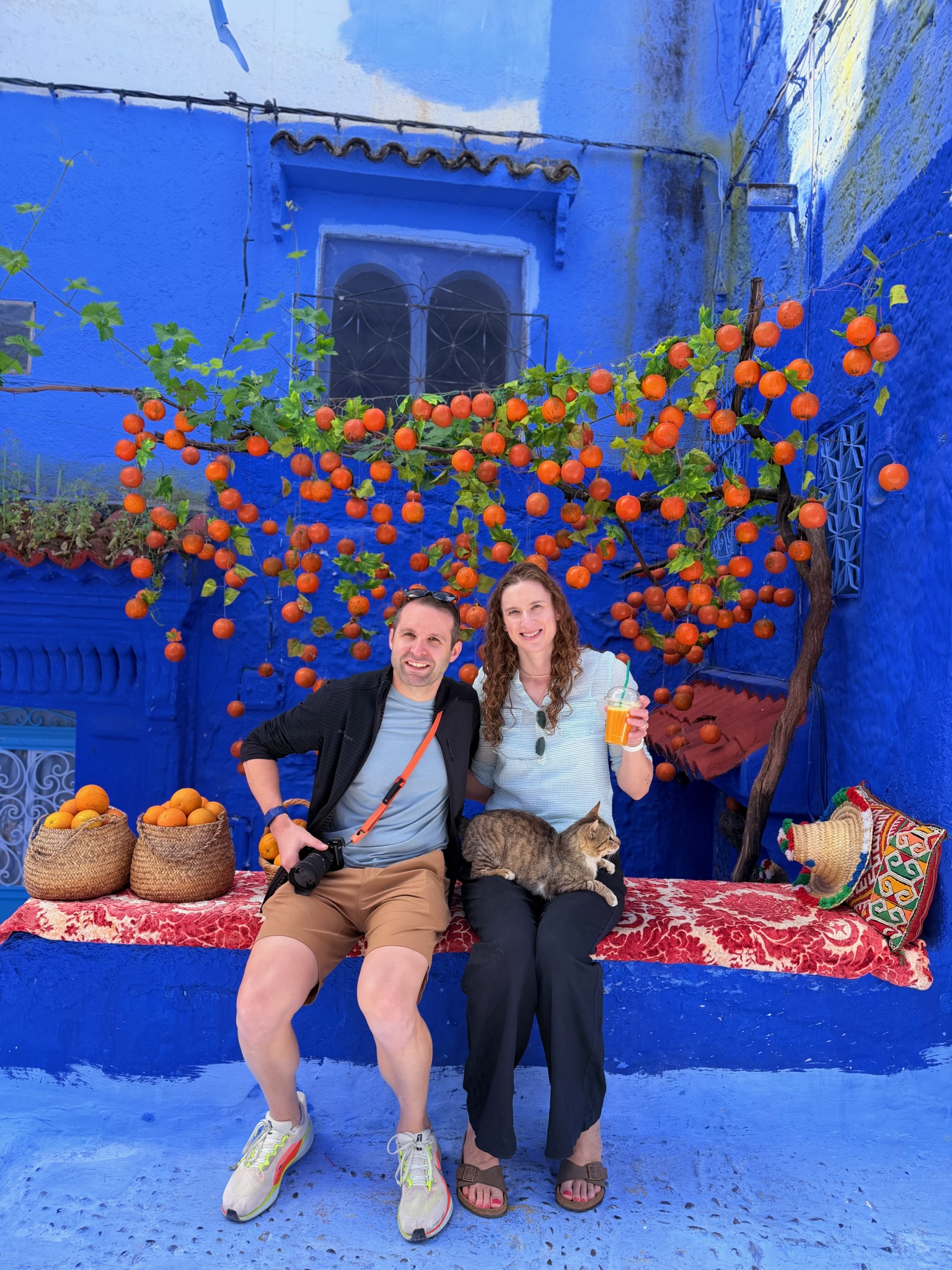
Chefchaouen rewards slow exploration. Without a particular agenda, you notice things — the way the blue deepens in the shade of a narrow alley, the texture of hand-painted walls, the cats everywhere (so many cats), a spice seller arranging his goods with the care of an art installation. We also visited the Kasbah of Chefchaouen, a beautifully preserved fortress at the heart of the medina with a small museum inside and lovely gardens — a quieter counterpoint to the bustle of the surrounding streets. During our walk we found the Instagram famous orange juice guy, Said Juice Seller. Enjoying a freshly squeezed glass of orange juice while one of the cats lounged in my lap (it must've been trained to schmooze the customers) ended up being one of my favorite memories of our trip, and also where I took my favorite photo of the trip.
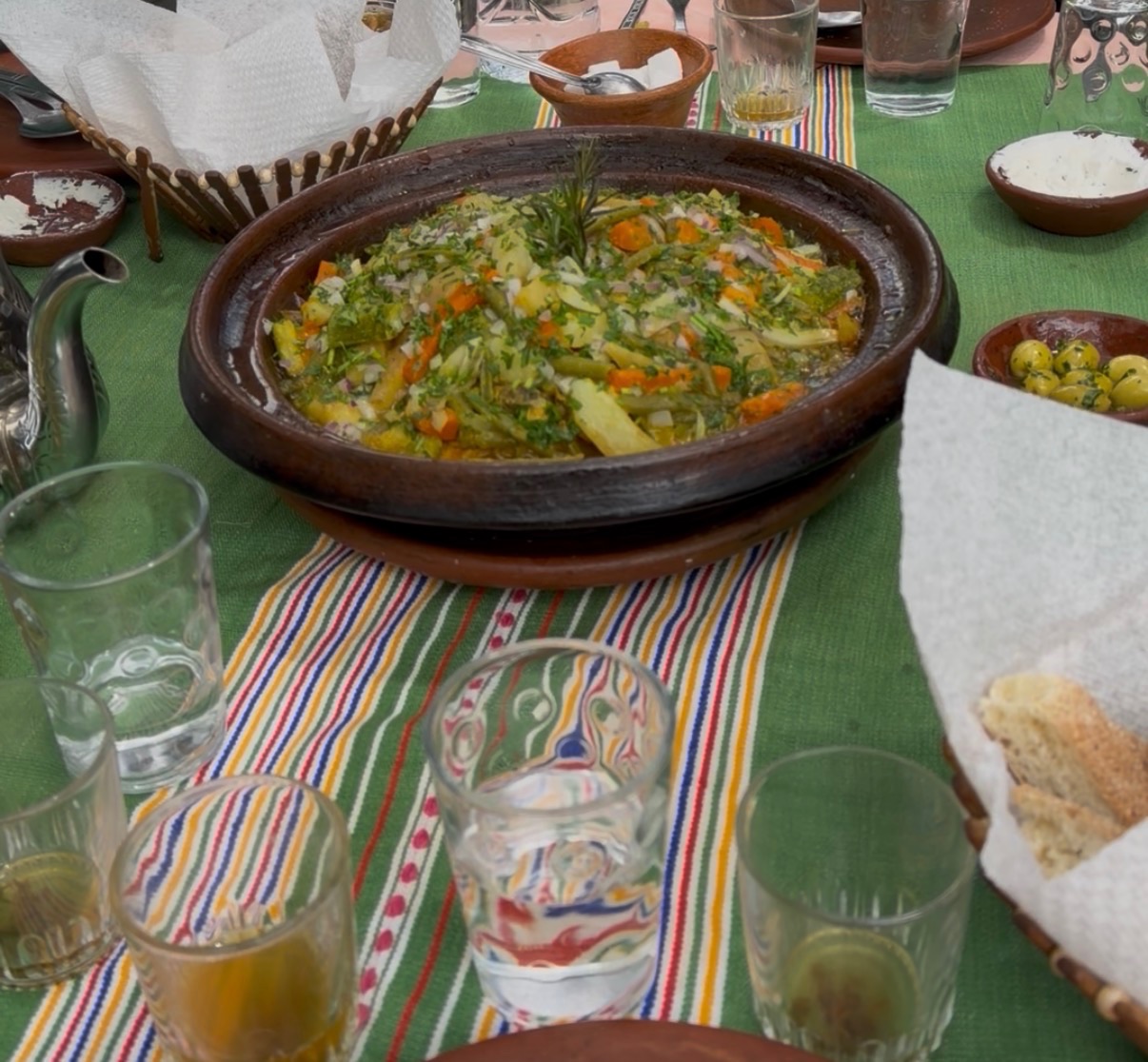
For lunch, we rejoined the group at an Amazigh family's home (the Amazigh are the indigenous people of Morocco). We were served mint tea and what ended up being my favorite tajine of the trip. Tajine is Morocco's most iconic dish: a slow-cooked stew of meat and vegetables braised in a distinctive cone-shaped clay pot that traps steam and concentrates the flavors into something deeply rich and aromatic. It was our first taste of Amazigh hospitality, and it set a tone we'd encounter again and again throughout the trip.
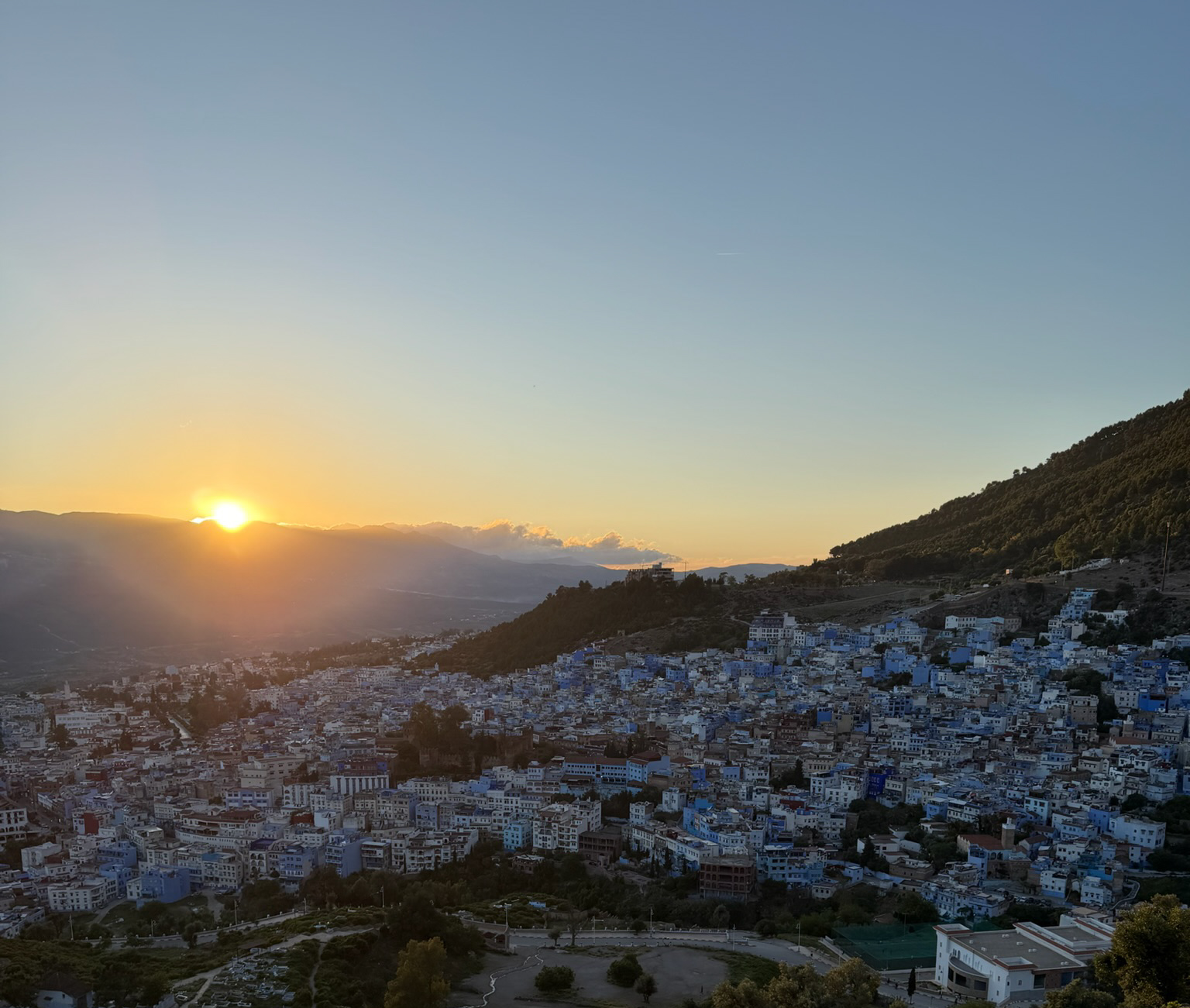
We had the rest of the afternoon and evening to ourselves, so we had an early dinner and then joined one of our fellow group members for the hike up to the Spanish Mosque overlooking the medina to watch the sunset. The view of the blue city glowing below in the golden hour light is not something we'll forget anytime soon.
Day 5: Volubilis & Meknès — Roman Ruins and Imperial Gates
Morocco's depth of history is one of its great surprises. Day 5 took us from the Rif Mountains toward Fes, but with two extraordinary stops along the way.
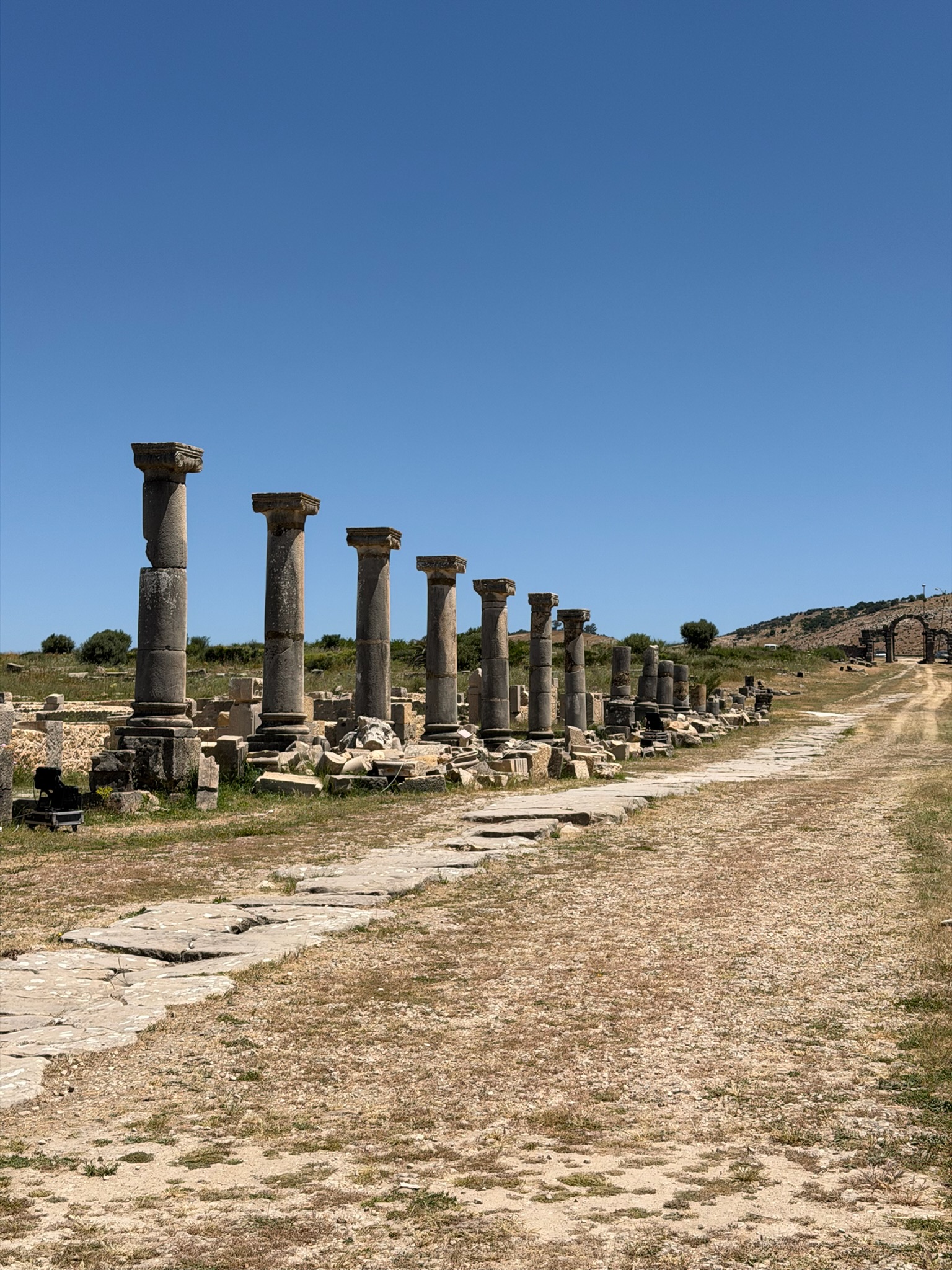
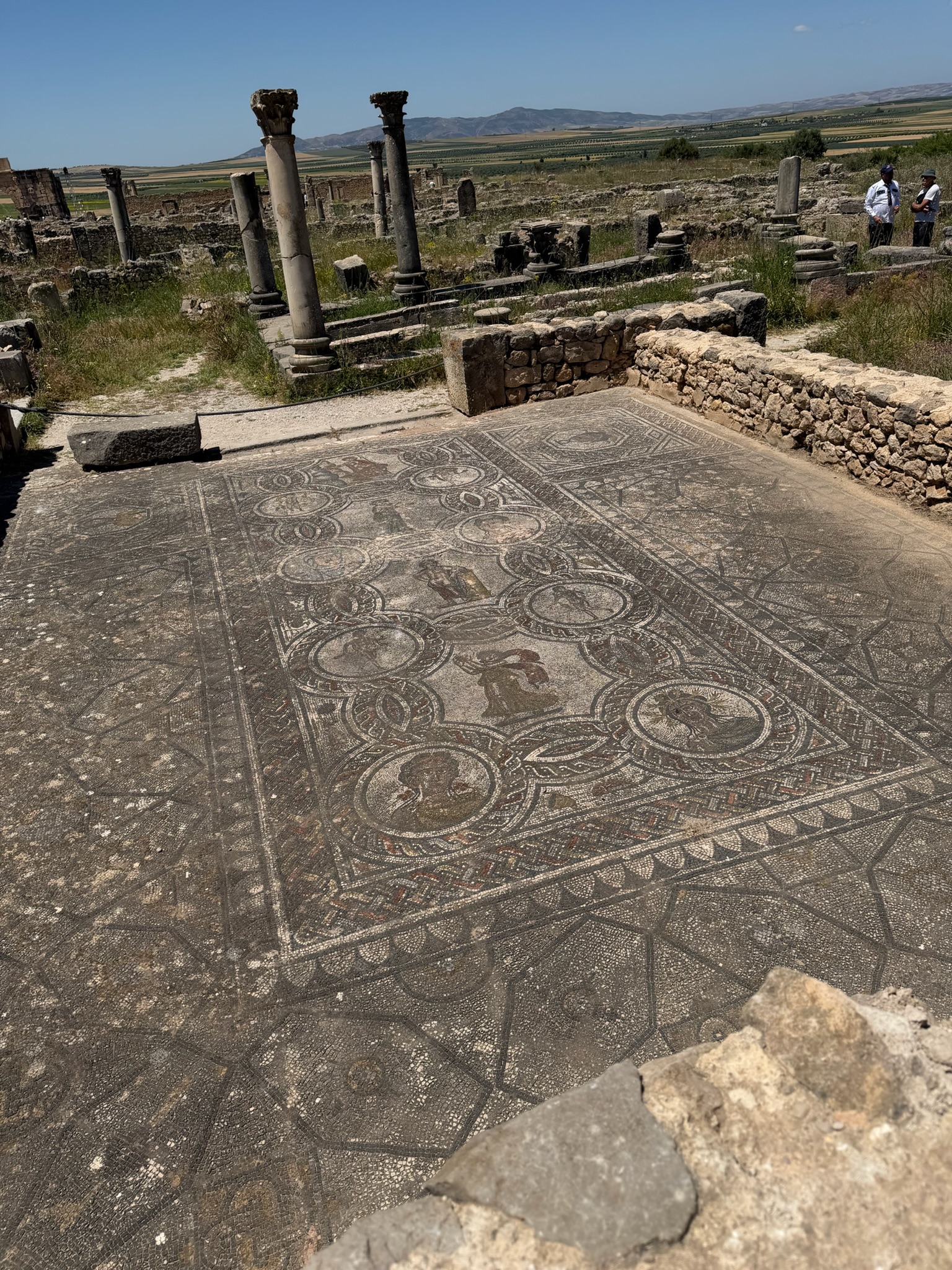
First: Volubilis, the best-preserved Roman ruins in Morocco and a UNESCO World Heritage Site. A local guide walked us through what was once a thriving Roman city at the edge of the empire — bathhouses, mosaic floors still vivid after two millennia, marble columns still standing. It's a remarkable place, and a reminder that Morocco has been a crossroads of civilizations for thousands of years.
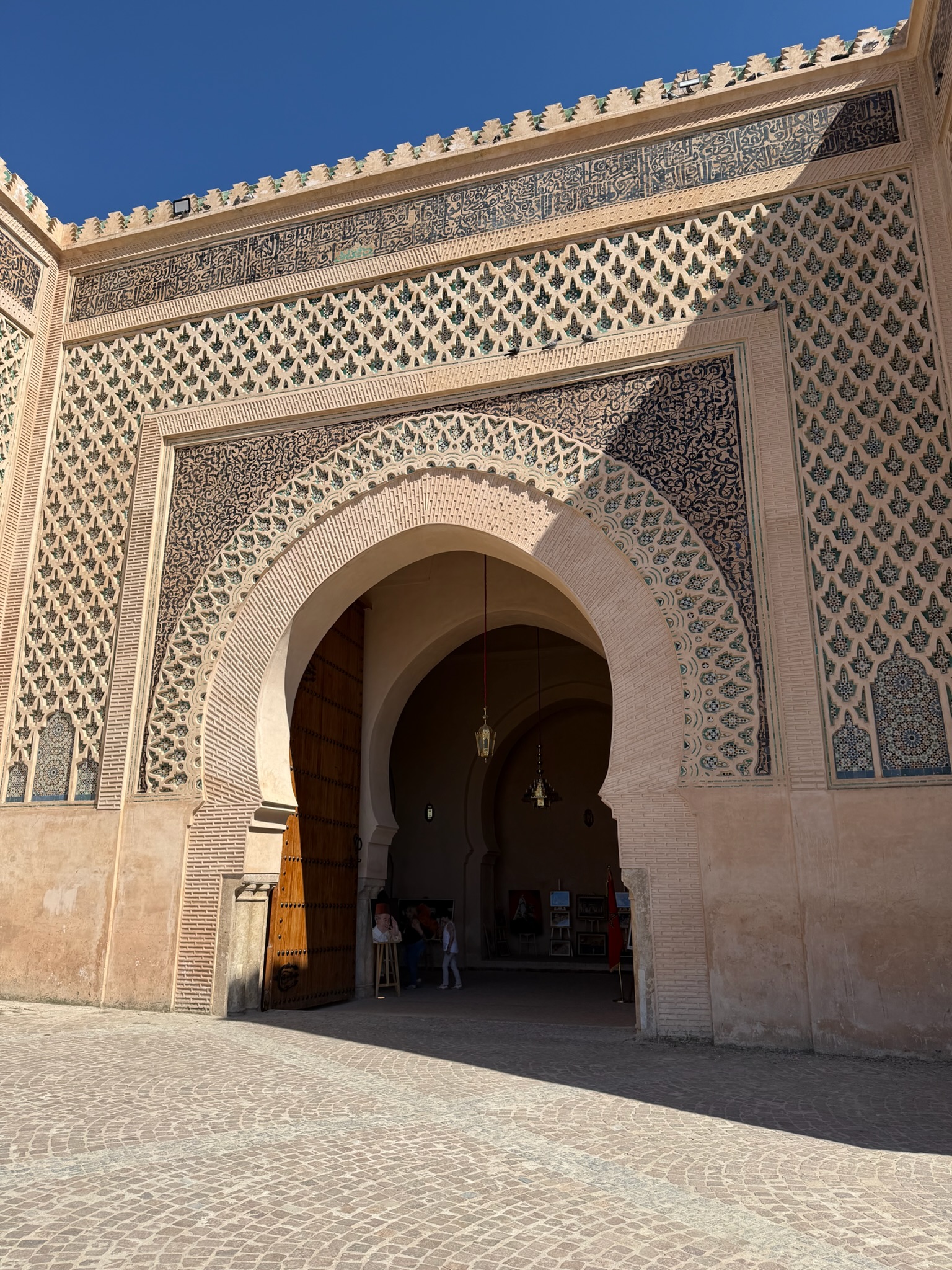
Then: Meknès, the least-visited of Morocco's four Imperial Cities, which gives it a refreshingly unhurried quality. We visited the monumental Bab Mansour gate, wandered through the bustling souk, and made stops at the Mausoleum of Moulay Ismail and the National Museum of Music.
By evening, we arrived in Fes.
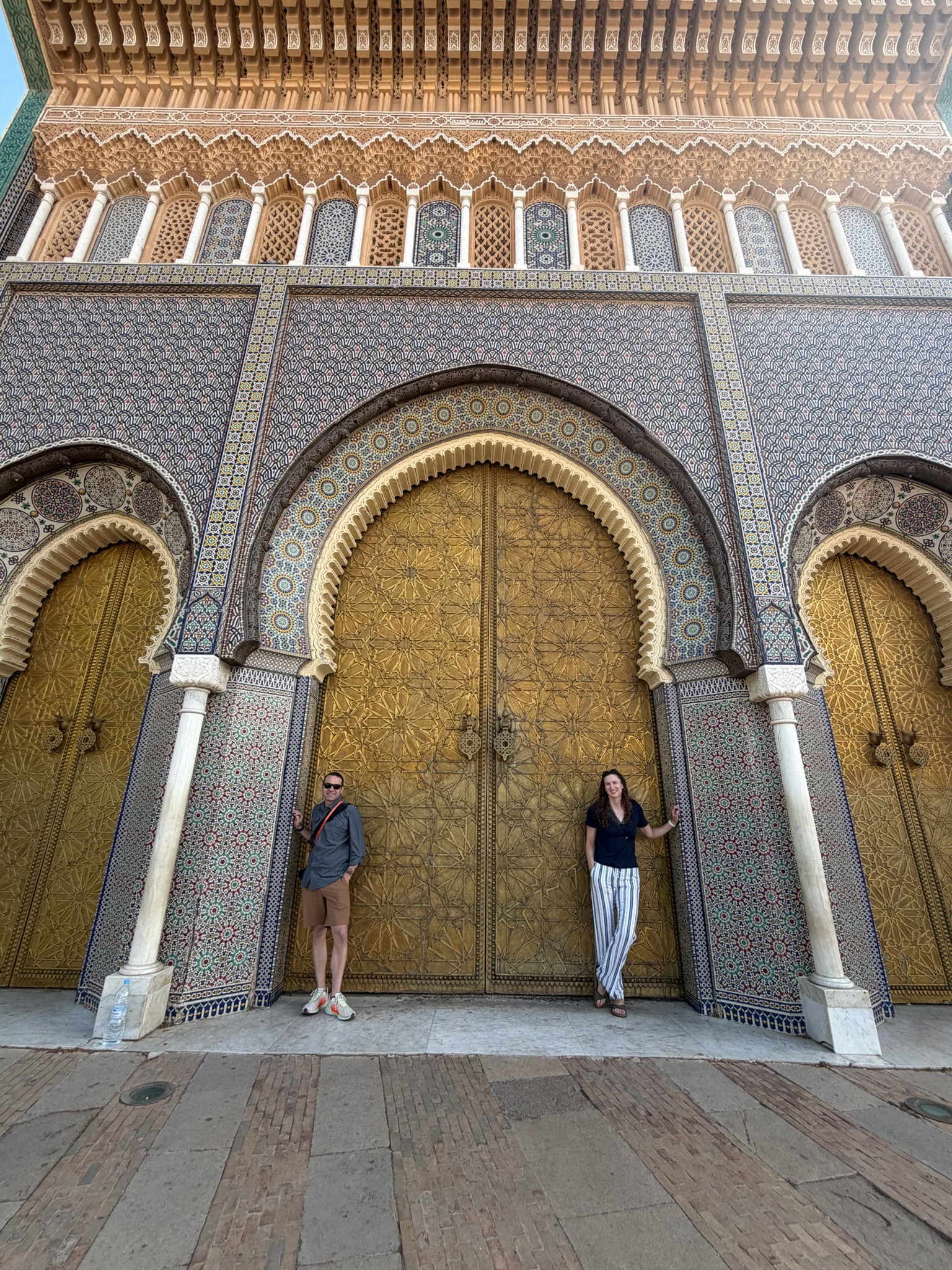
Day 6: Fes — The World's Largest Living Medieval Medina
If Chefchaouen captured our hearts, the Fes medina captured our minds.
The numbers alone are staggering: over 9,000 streets across 900 acres. Buildings dating to the 9th century. 350 mosques still in active use. The Fes medina is the largest car-free urban area in the world — donkeys and mules are still the primary transport of goods through its ancient lanes.
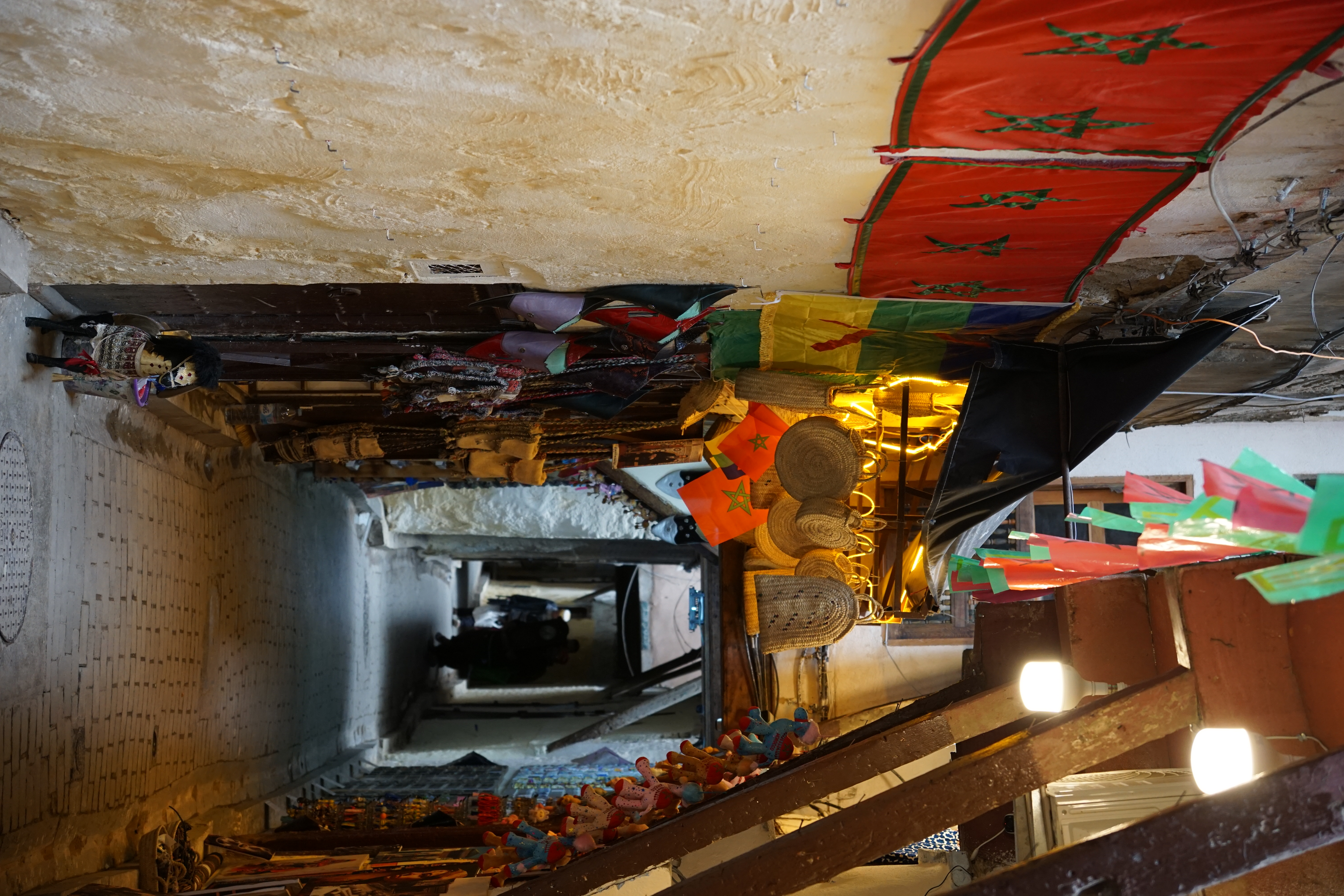
A local guide led us in, and the instruction was simple: stay close and try to remember your way. We did not remember our way, and that was OK. Walking through the souk was both fascinating and eye-opening. Did I mention that you can get camel meat in Morocco? Well you can, and in the meat market we were treated to an actual camel head hanging in front of a stall selling camel meat. If you're vegetarian/vegan, explore the souks at your own risk.
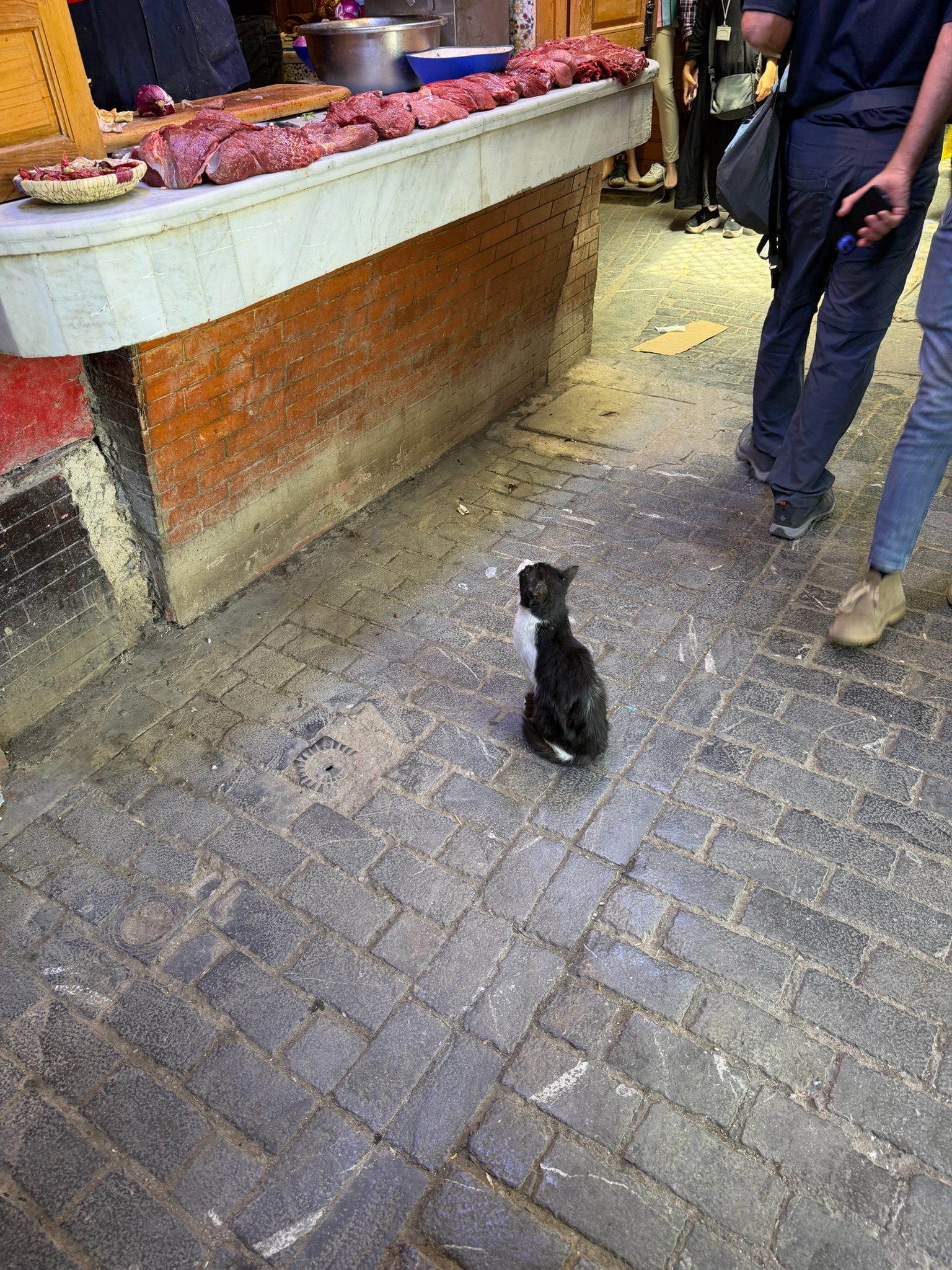
About the medina: As we came to understand more deeply throughout the trip, every Moroccan medina — the historic old town — is organized around four pillars of community life: the mosque, the hammam (public bathhouse), the communal oven, and the public fountain. To a Western eye it can seem chaotic at first. But that "chaos" is centuries of living, trading, and community, still functioning exactly as it always has.
We stopped at Art D'argile, a ceramics collective, and it was one of the most fascinating stops of the entire trip. We toured the workshop and watched artisans at work — and what struck us most was the extraordinary level of precision required to create the tiles used in Morocco's famous mosaic (zellij) work. Each piece is hand-cut and hand-placed with a level of attention to detail that borders on meditative. These are skills passed down through generations, and watching them practiced up close gave us a new appreciation for every tiled surface we'd admired in the medinas. We bought a few bowls before leaving — knowing they were genuinely handmade in Morocco made them feel like something worth carrying home carefully.
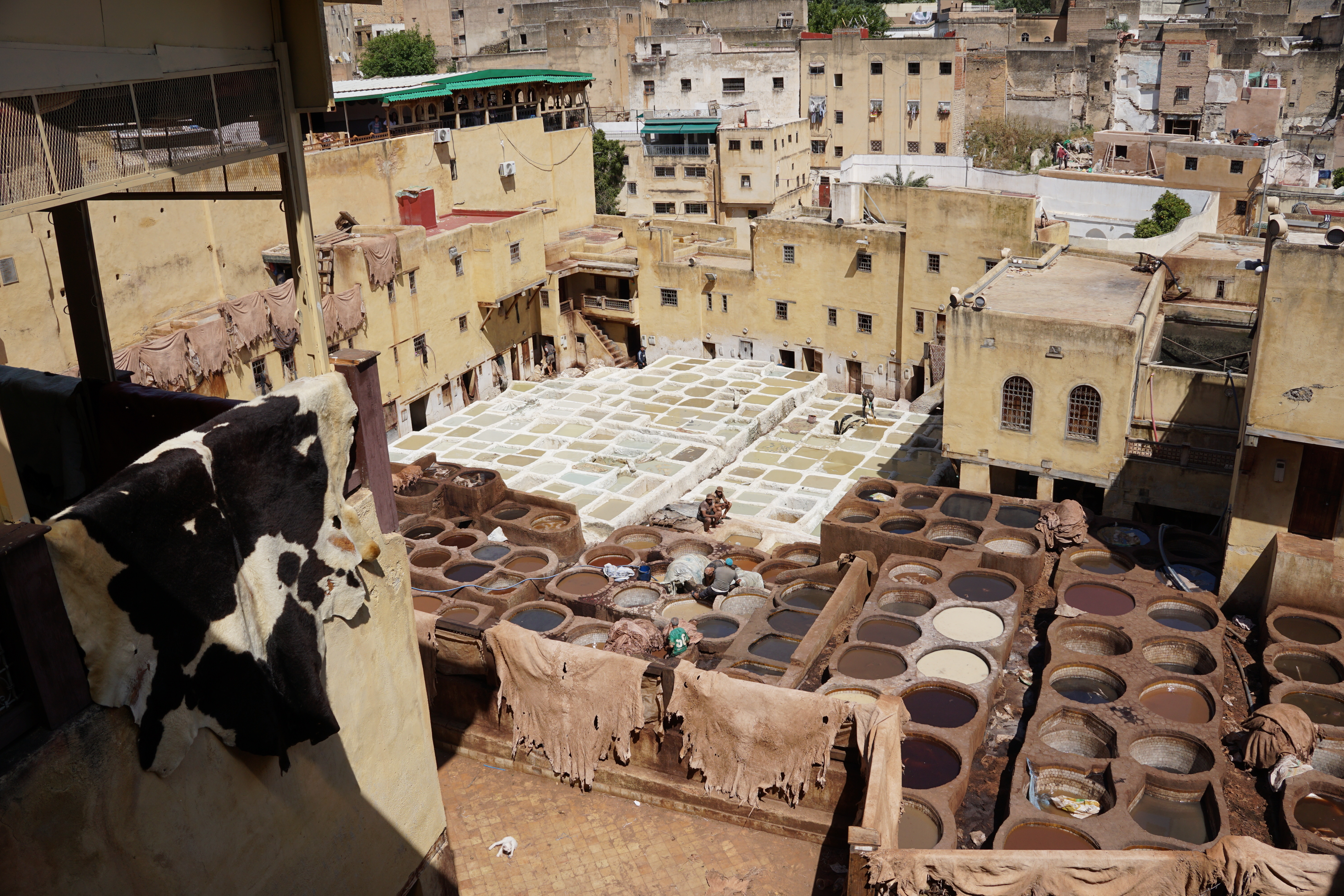
The highlight of the Fes medina tour is the tanneries — one of the most iconic images in all of Morocco. From the balcony of a leather shop overlooking the vats of dye (the shopkeeper hands you a sprig of mint to offset the smell — you quickly find out why), you watch men wade through pools of color, treating and dyeing hides exactly as it's been done here for centuries. It's arresting. We spent a good while just standing there watching.
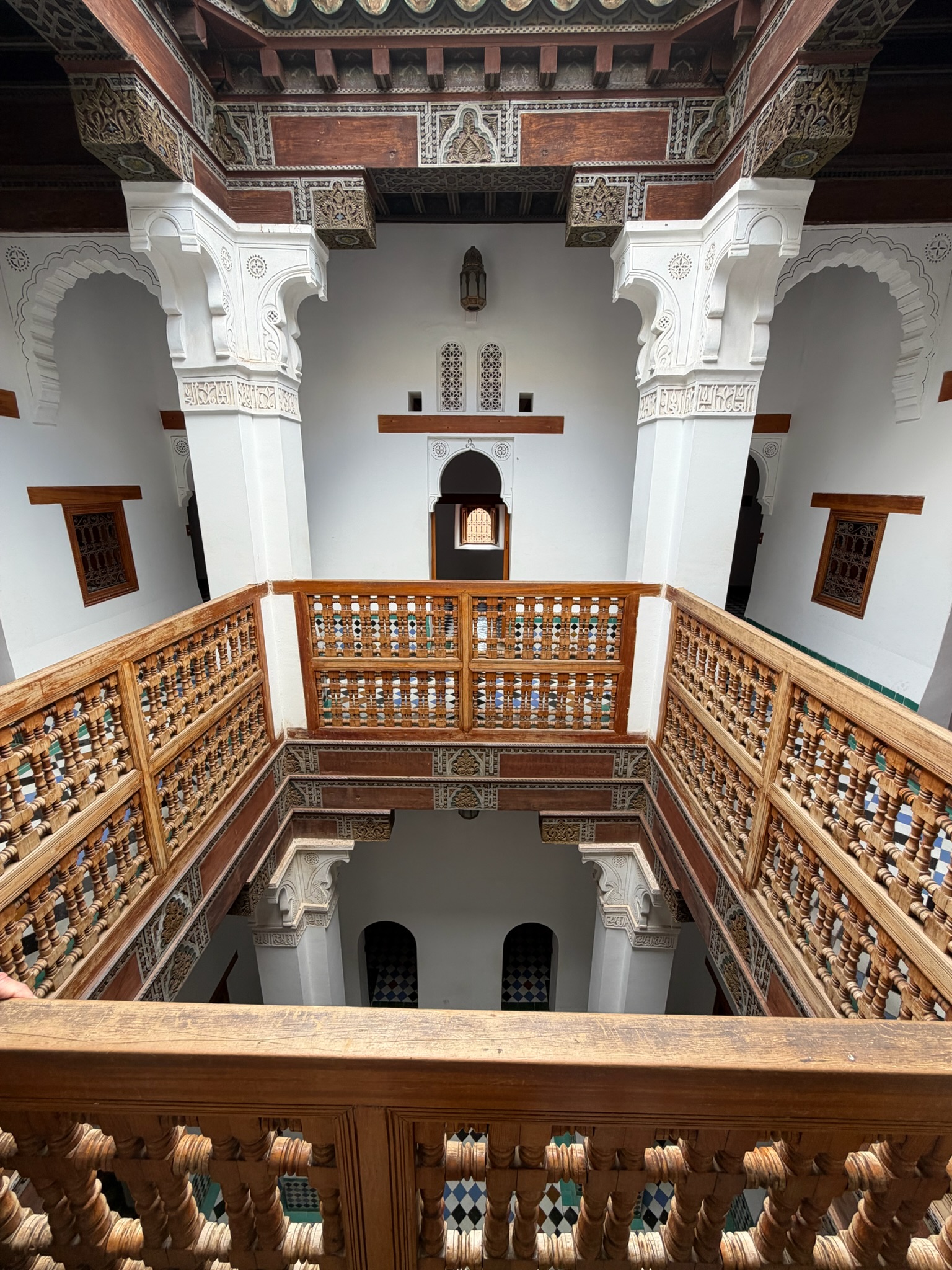
Don't miss: The Al-Qarawiyyin, founded in 859 AD, is considered by many scholars to be the world's oldest continuously operating university. You can't enter as a non-Muslim, but passing its gates is still worth pausing for.
Day 7: The Atlas Mountains — Crossing Into Another Morocco
The drive from Fes to Bin El Ouidane is the day most travelers probably don't think much about in advance. But it turned out to be far more memorable than we expected.
We wound our way into the Middle Atlas — an area rarely touched by tourism — and this is where Morocco showed us yet another face. And it challenged one of our biggest assumptions about the country.
When most people picture Morocco, they picture the Sahara — sand dunes, arid landscapes, that iconic desert palette. Northern Morocco is something else entirely. The countryside is strikingly green — rolling hills and valleys carpeted in wildflowers, including great sweeps of red poppies along the roadside that seemed almost too vivid to be real. Farmland, cedar forests, terraced hillsides. It was lush in a way that genuinely surprised us, and beautiful in a completely different way than the medinas and mountains had been.
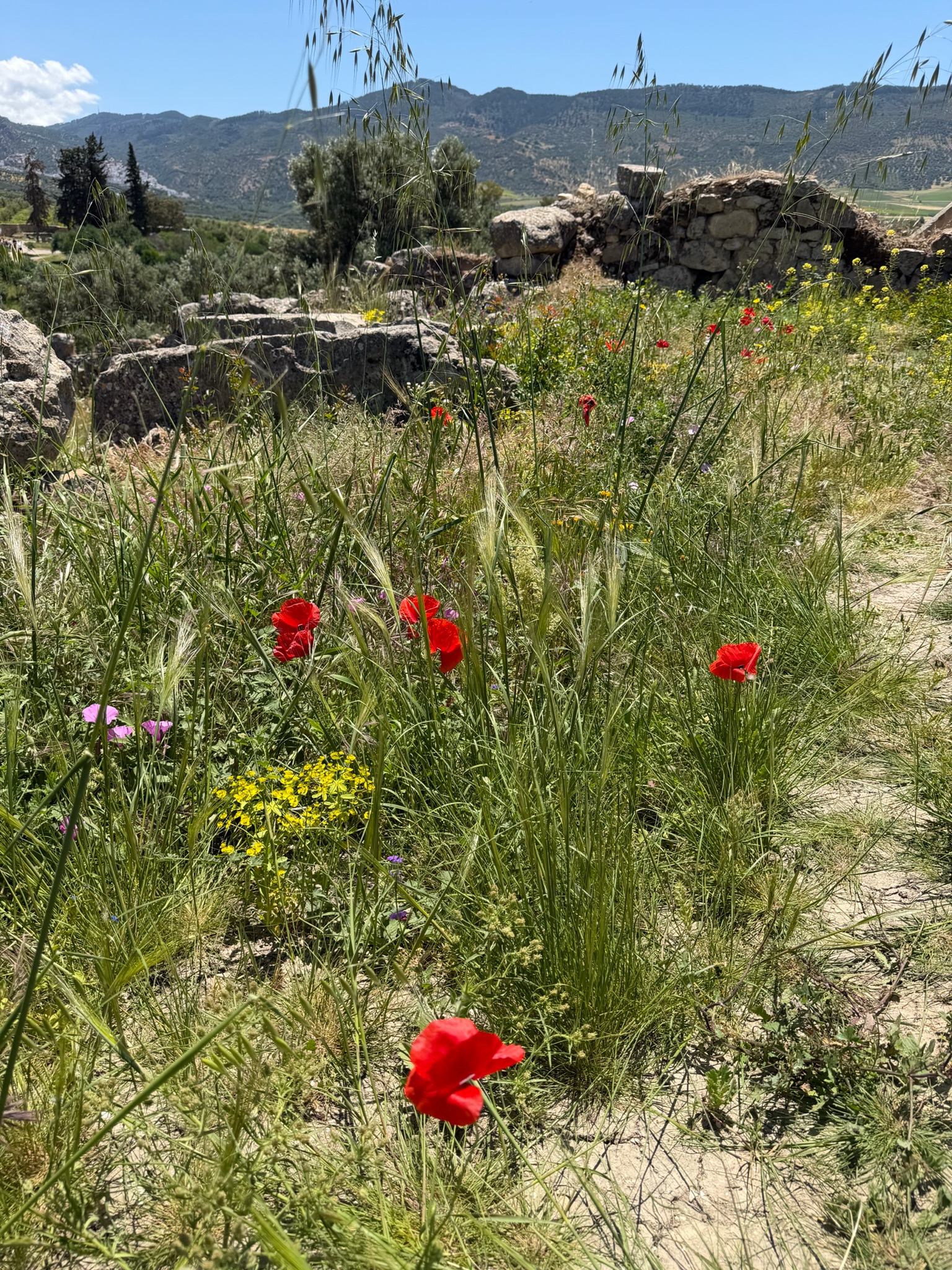
Just as striking: passing through small villages and watching daily life unfold at the side of the road. People riding donkeys to market, loaded with goods, completely unbothered by our passing van. It was one of those images that reminds you how different — and how vast — the world is.
We also stopped at Ain Asserdoun, a natural spring with crystal-clear azure water hidden well off any tourist trail. This day ended up reminding us why the journey matters as much as the destination.
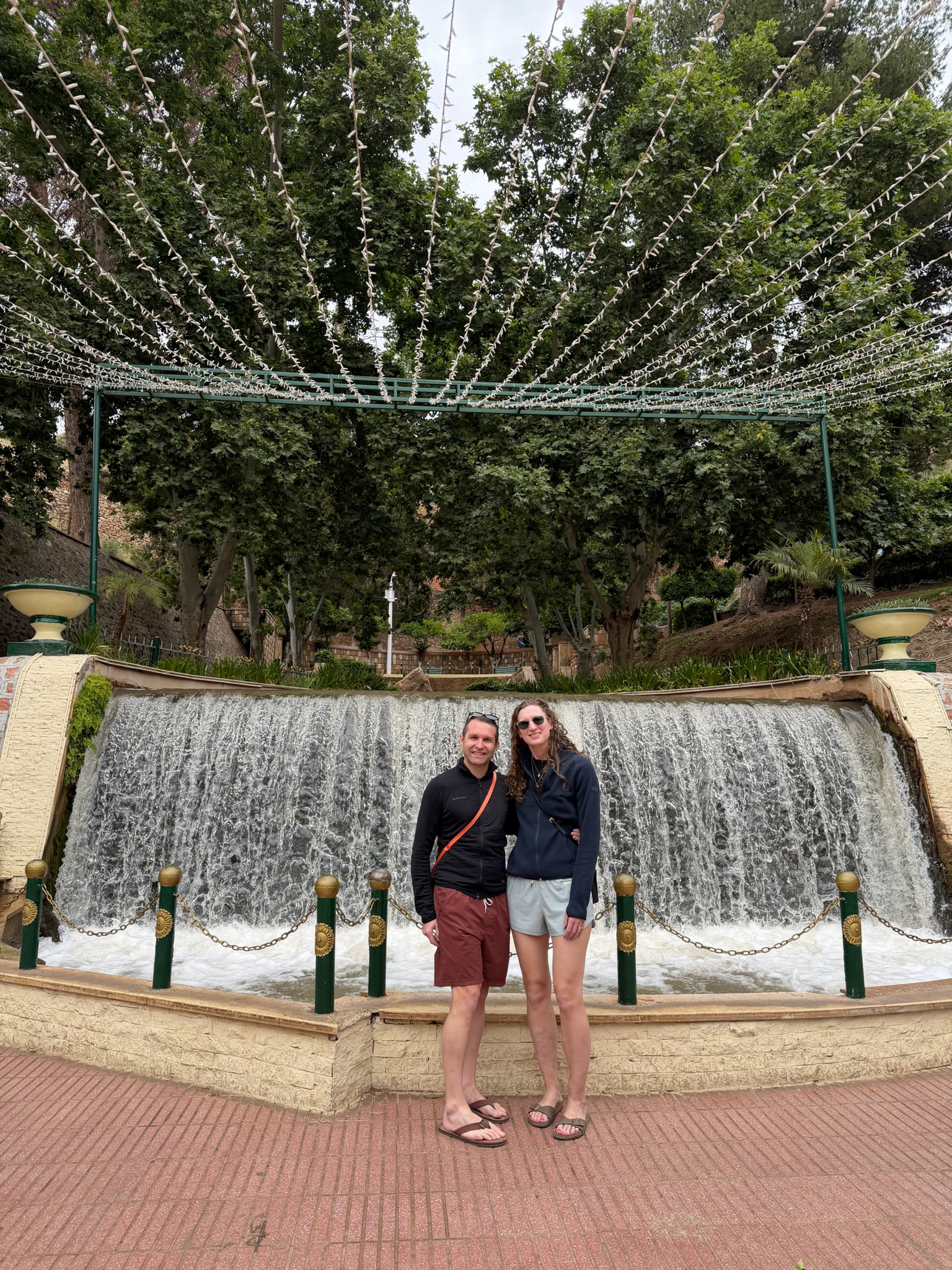
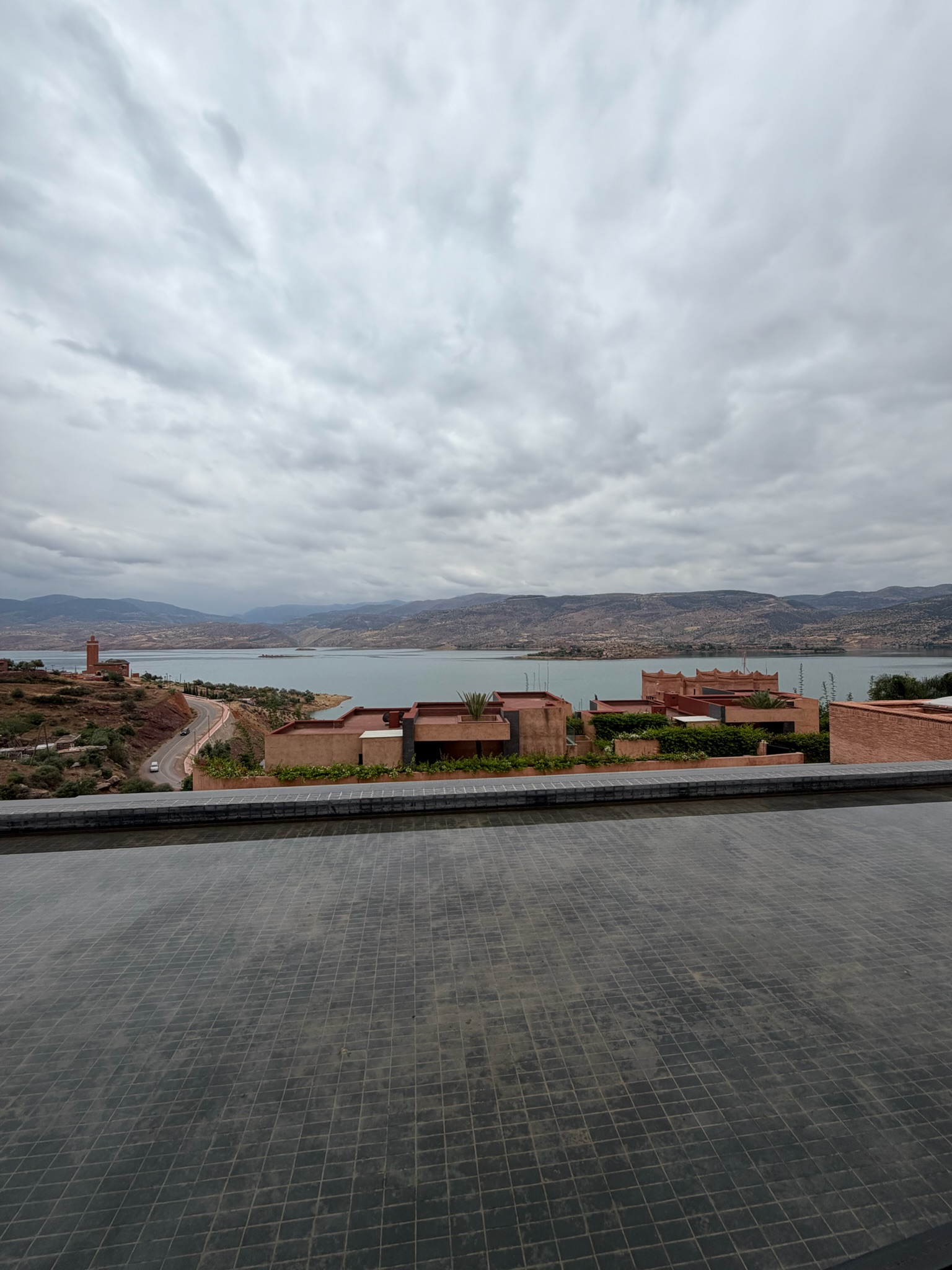
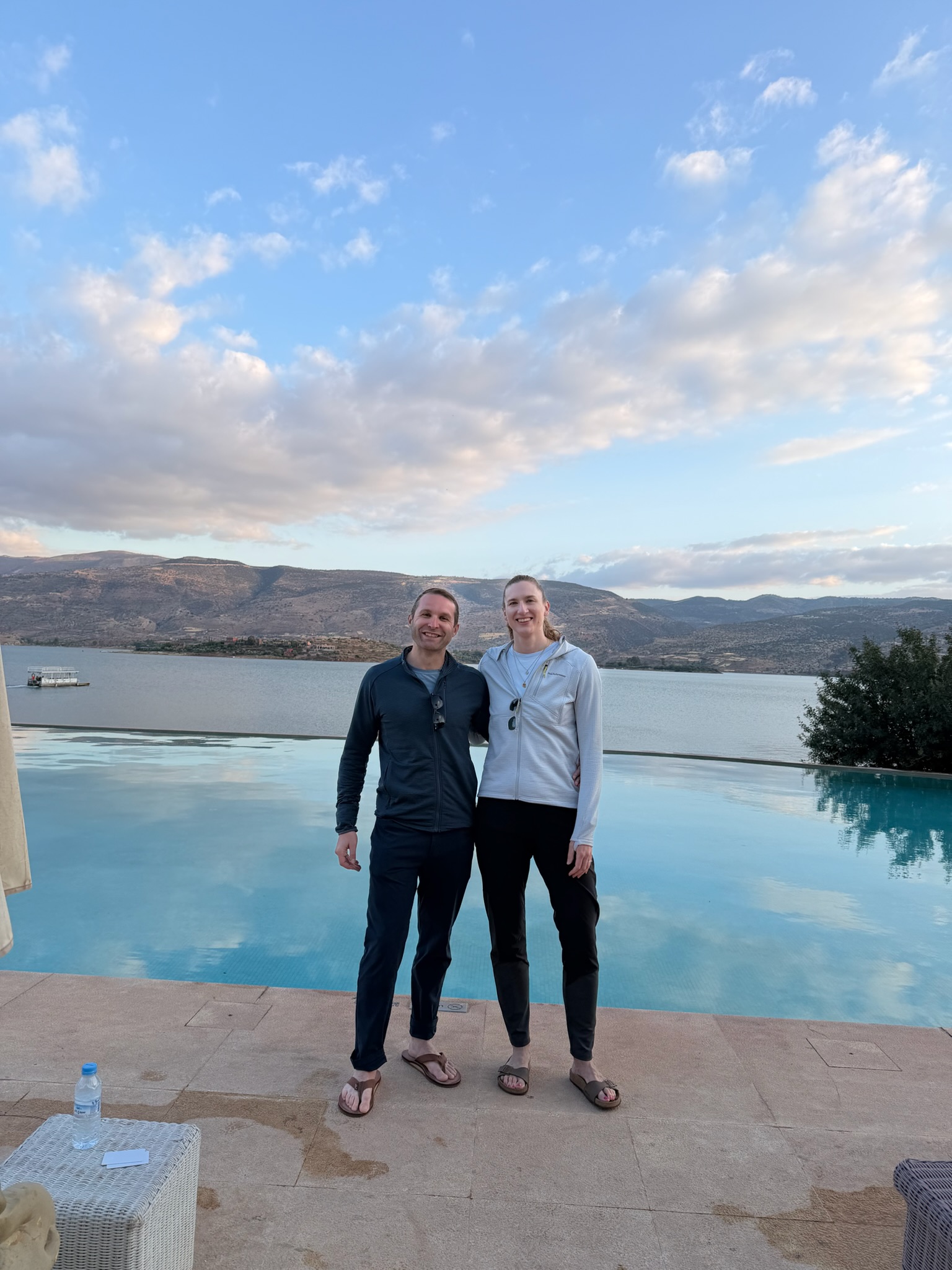
We arrived at the Widiane Resort on the shores of Lake Bin El Ouidane in the evening — a small, family-run property built in the style of a traditional Moroccan villa, perched above a gorgeous lake with mountains all around. Watching the light fade on the lake. Dinner at the hotel. This was a day to breathe.
Day 8: Bin El Ouidane — A Rainy Night Changes Everything
One quick note on the weather before we get into this day: we were extraordinarily lucky. All week long it was dry and temperatures stayed in the 60s and 70s — cool, comfortable, and perfect for exploring medinas and hiking mountain trails. We couldn't have asked for better conditions.
Then came one night of heavy rain.
The original plan for Day 8 was a hike to Imsefrane Cathedral — a remarkable geological formation of rock sculpted by wind and water into shapes resembling a cathedral's spires. We were looking forward to it. But overnight rainfall had made the road to the trailhead impassable, and Sophia broke the news after breakfast.
What happened instead turned out to be one of the most relaxing days of the tour.
We took a boat across Lake Bin El Ouidane — the same lake we'd been admiring from the Widiane Resort terrace — and arrived at the home of another local Amazigh family on the other side. Lunch was warm and generous: chicken tajine cooked over a charcoal fire, and a demo given by Sophia on how to make the perfect cup of mint tea. It was a reminder that the best travel moments are sometimes the ones that weren't on the itinerary at all. The rain gave us something the hike couldn't.
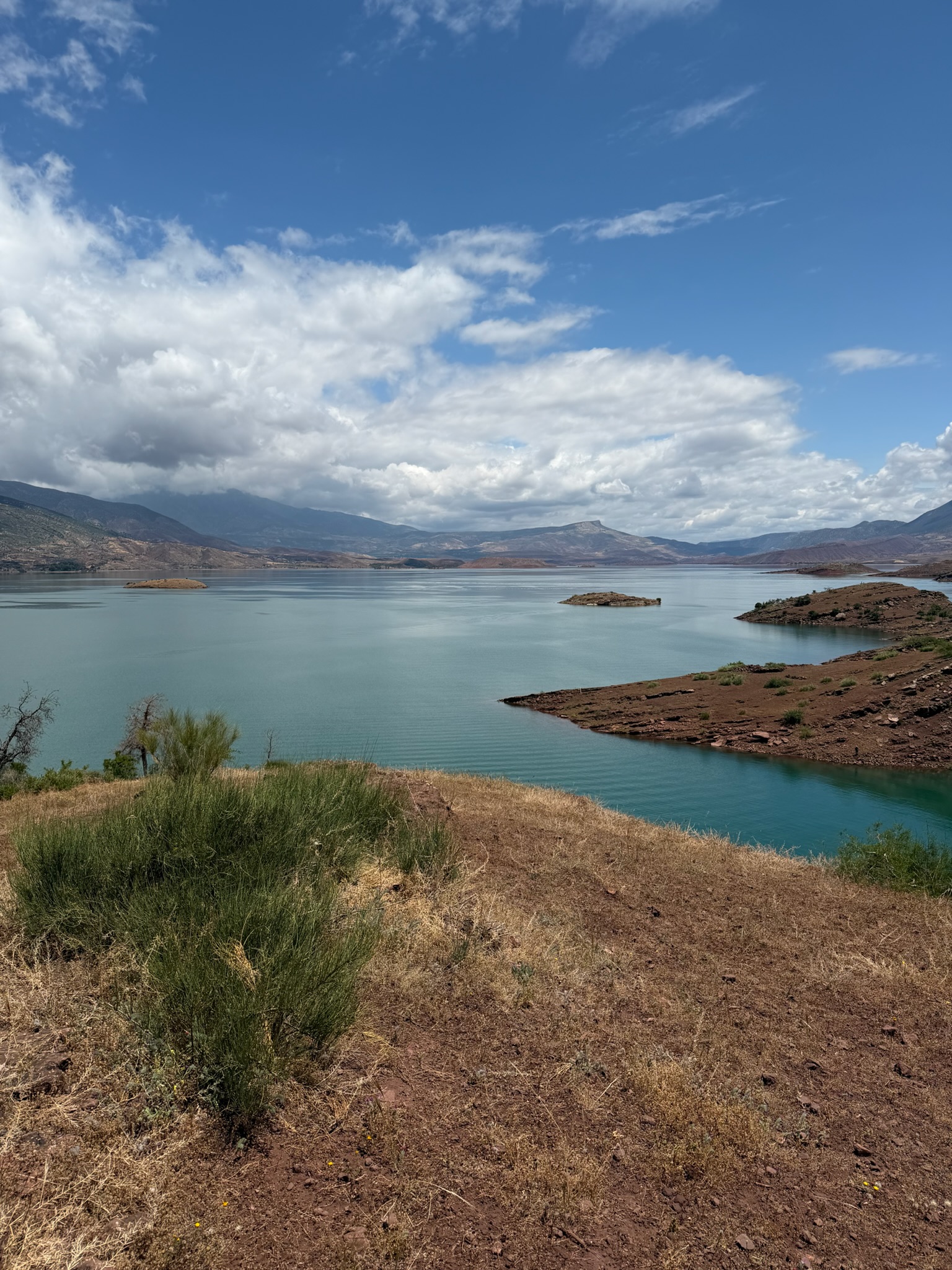
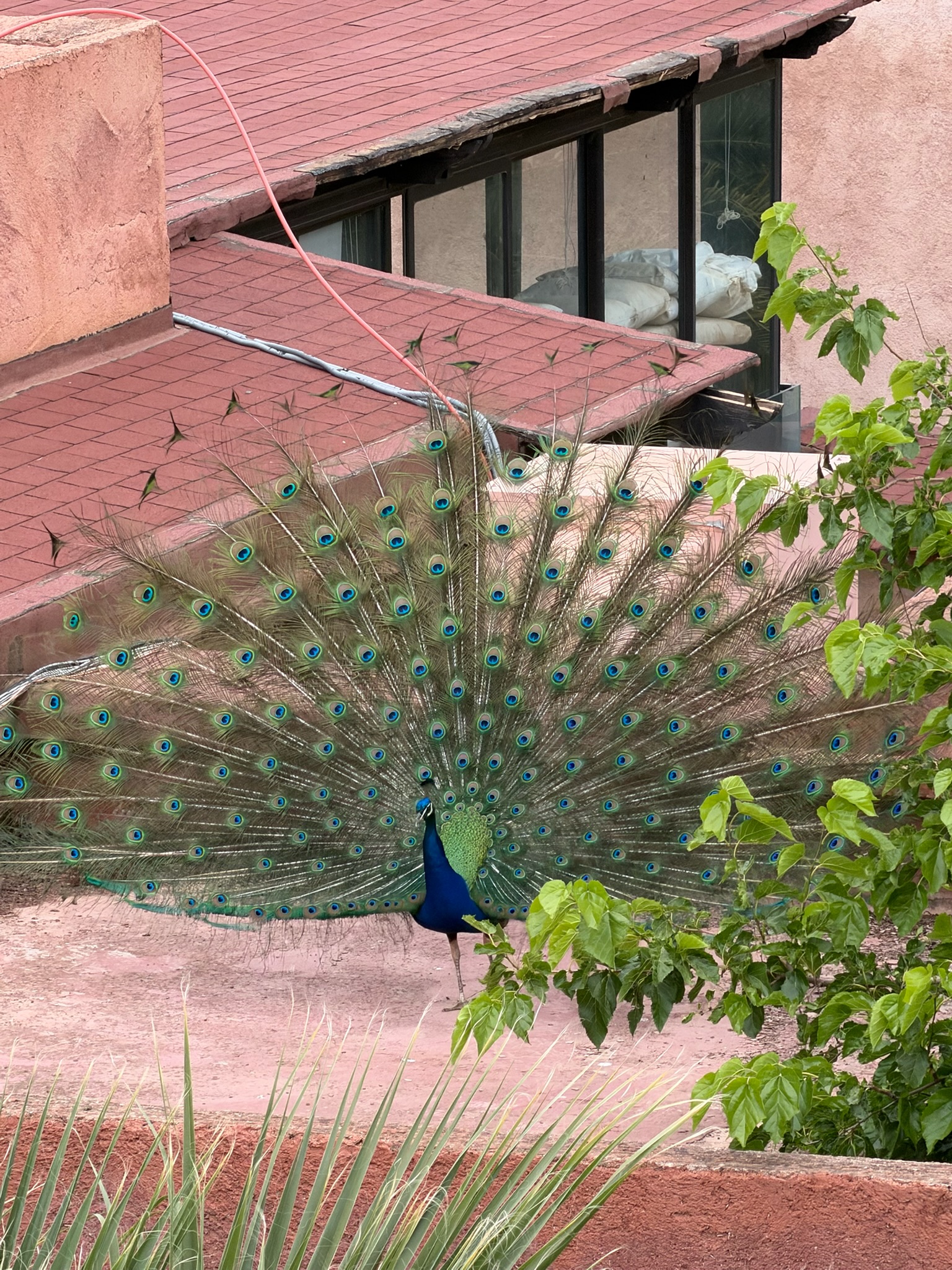
We returned to the resort mid-afternoon and were able to relax the rest of the day, listening to the sounds of the 2 resident peacocks on the property while we lounged on our balcony.
That evening we met up with Sophia and the rest of the group for more mint tea and dinner while the sun set over the lake — which, given that we'd now been across it, felt a little more personal.
Day 9: Ouzoud Falls & Marrakech — Grand Finale
The last full day of the itinerary was a fitting send-off.
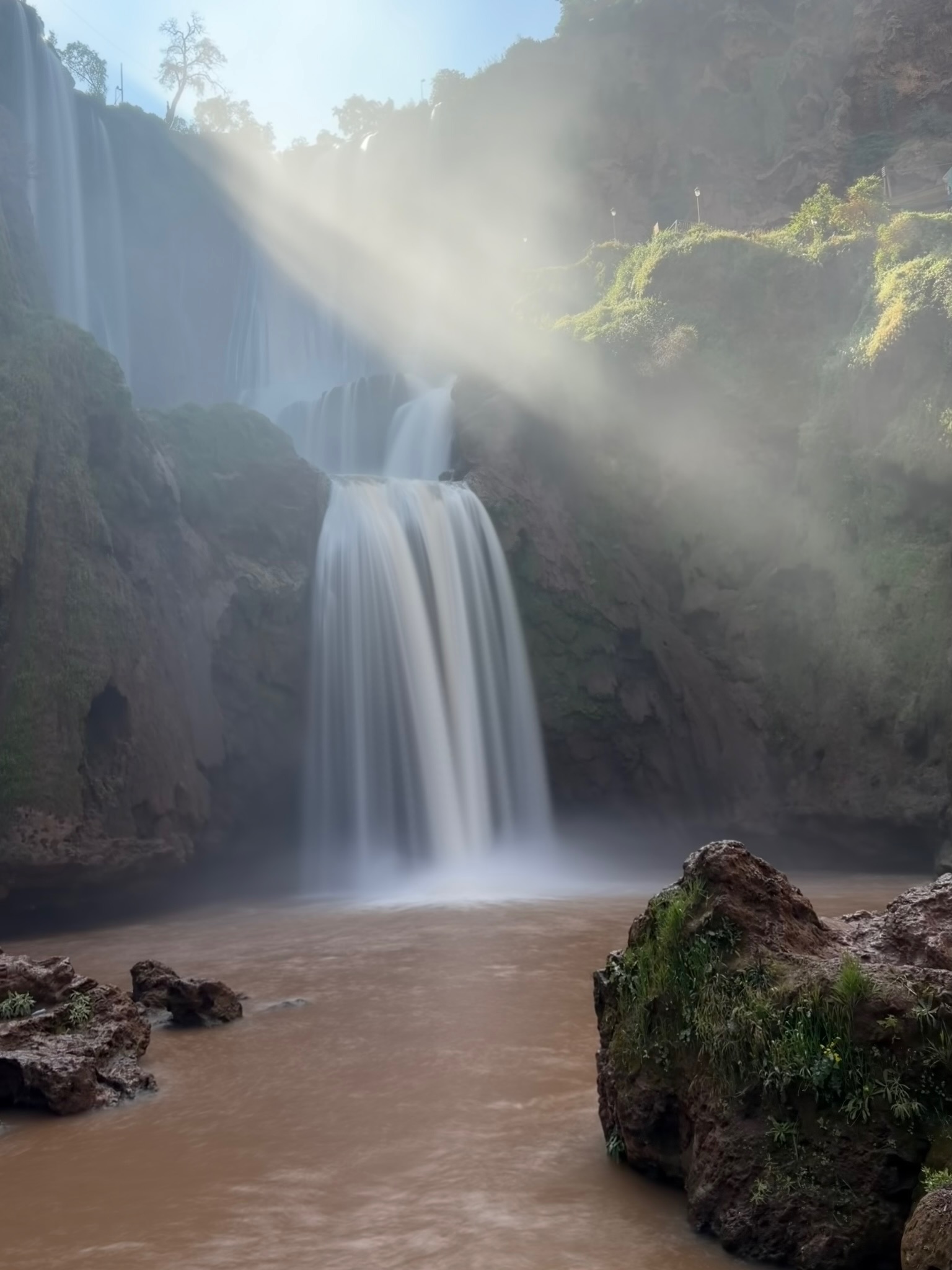
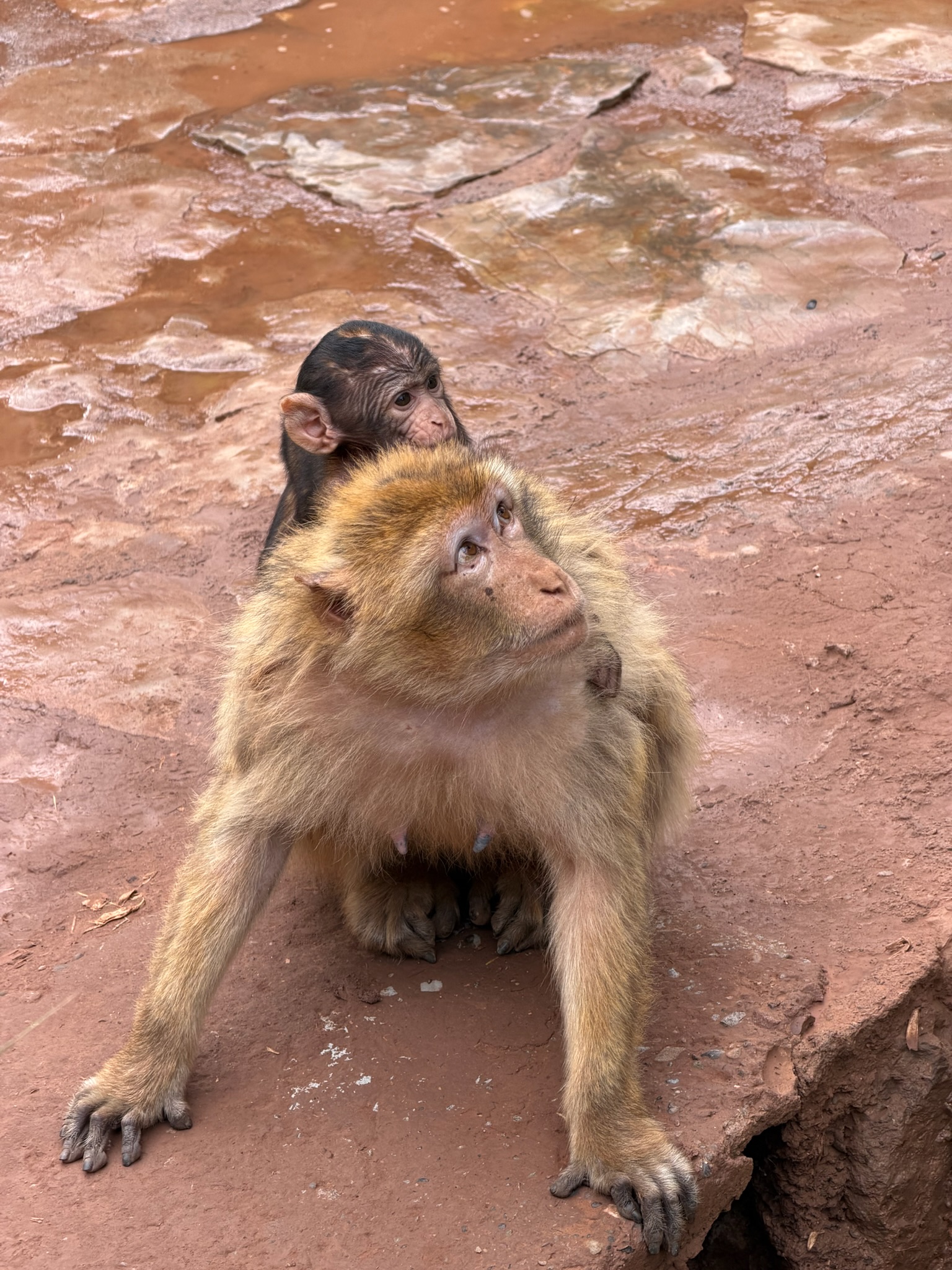
We stopped first at Ouzoud Falls, North Africa's highest multi-tiered waterfall at 360 feet. The falls are named after the Amazigh word for "the act of grinding grain" — you'll see old grain mills still at work nearby. Barbary macaques play in the trees and mist around the falls, and rainbows arc through the spray. It's magnificent.
Then: Marrakech. The last of Morocco's great cities, and perhaps the most overwhelming in the best possible way.
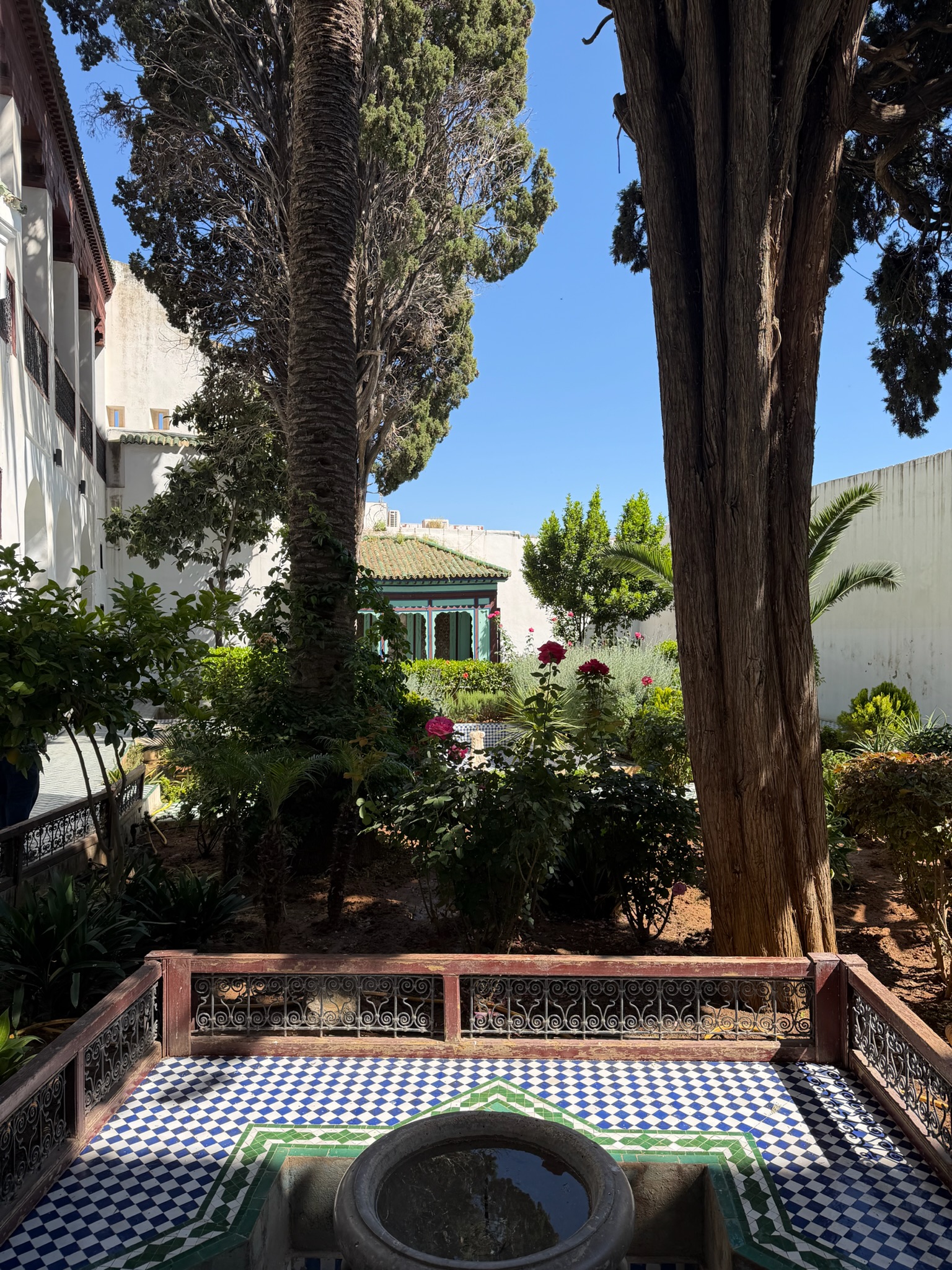
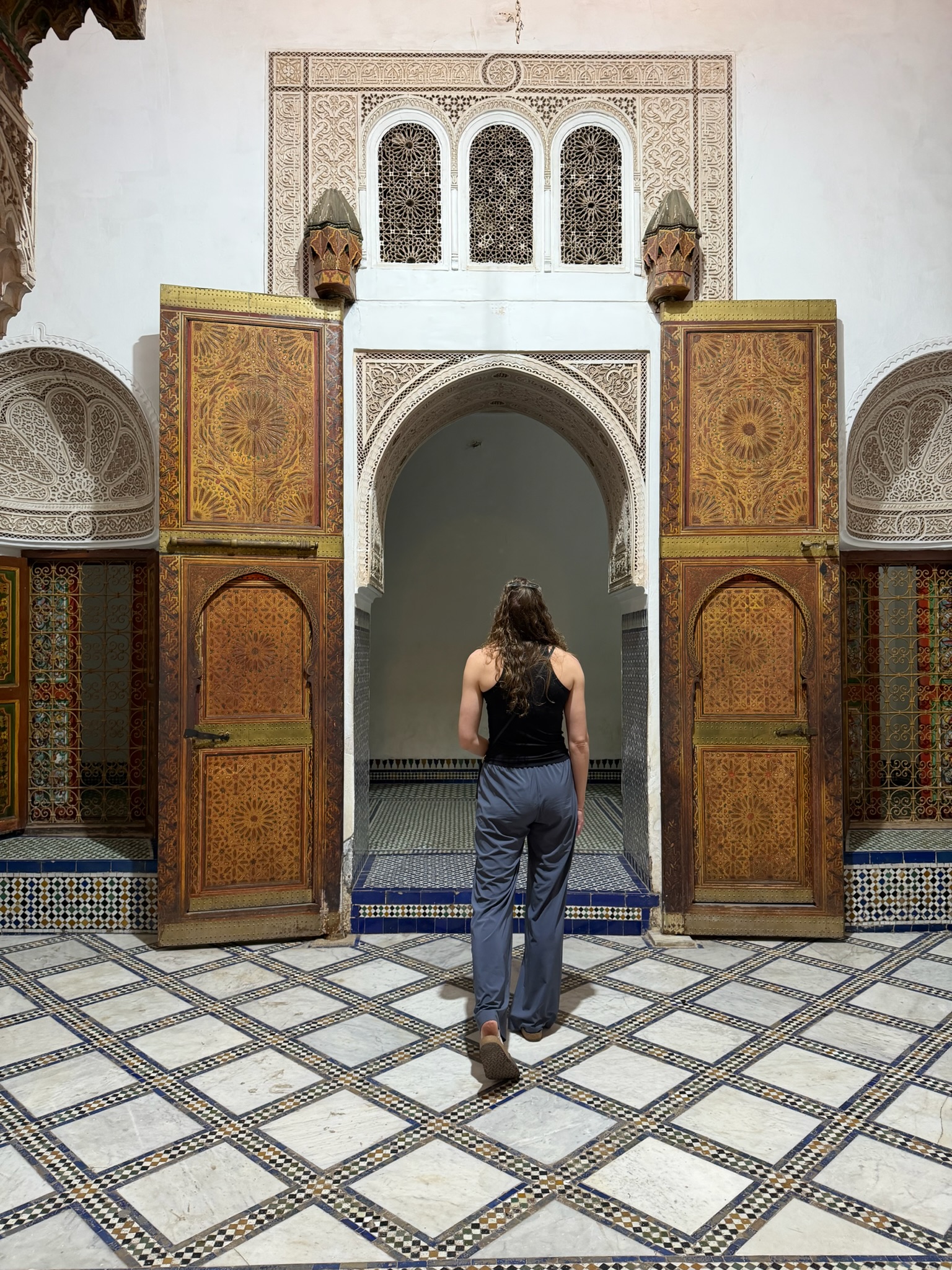
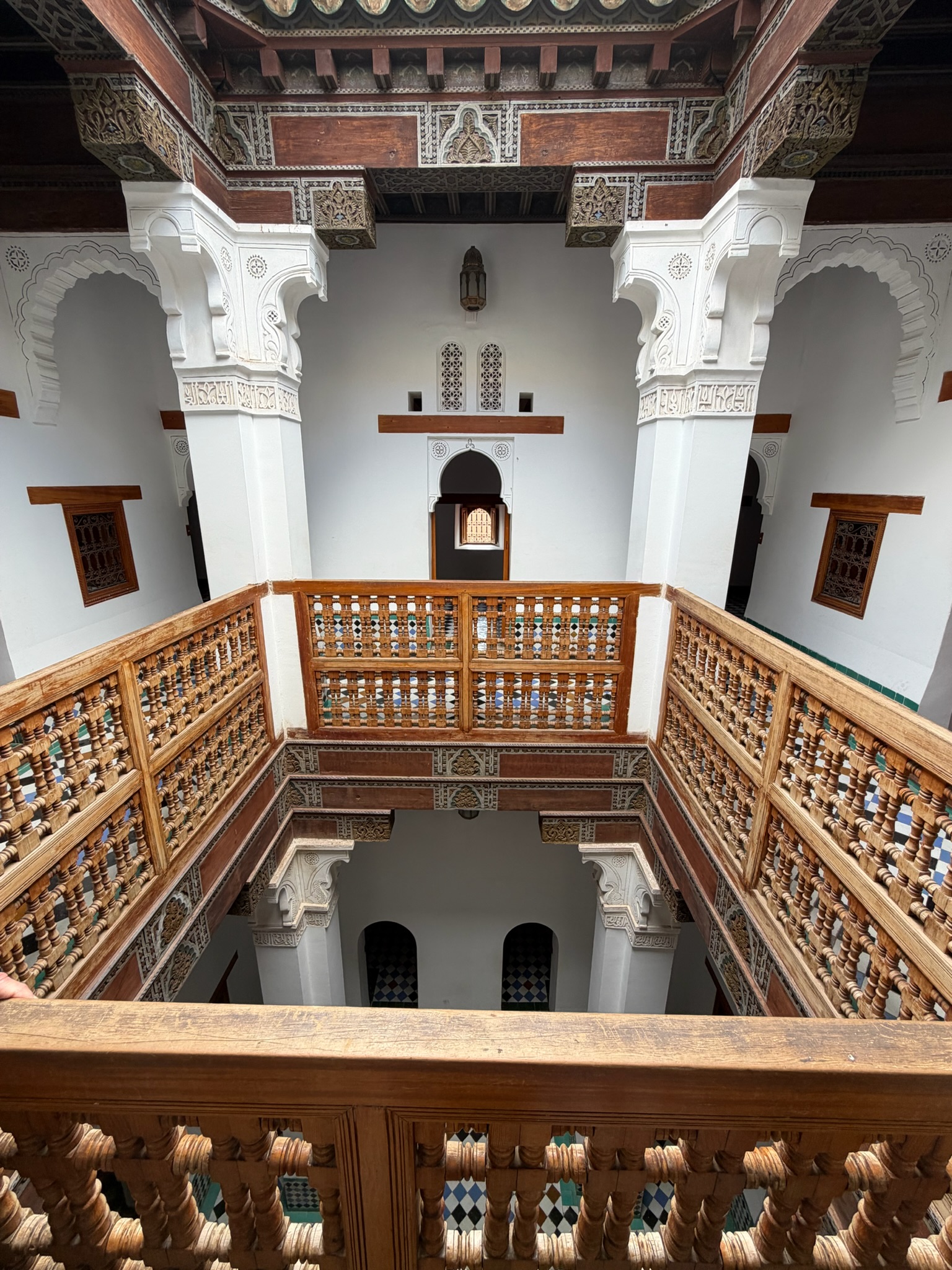
A guided walk took us through the Marrakech medina and into the souk — a labyrinthine marketplace of spices, textiles, lanterns, leather slippers, and every craft Morocco produces. We visited the Ben Youssef Madrasa, a 14th-century Islamic college with some of the most breathtaking architectural detail we've ever seen: a central courtyard with a reflective pool, intricate zellij tilework, and carved cedar wood and stucco that seems almost impossibly detailed.
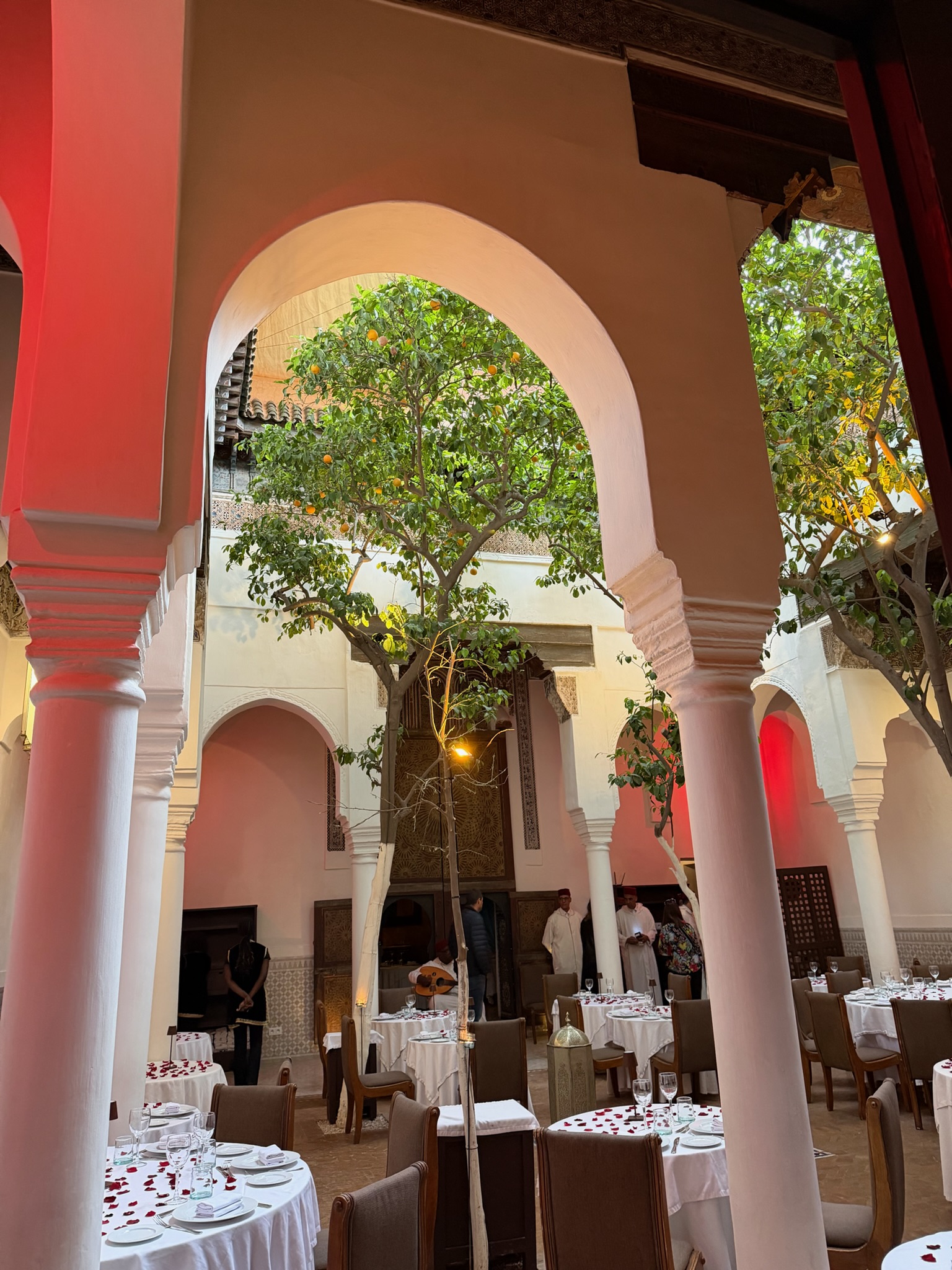
For our farewell dinner, Sophia led us to Dar Zellij — a restaurant housed in a beautifully restored riad, and one of the most memorable dining experiences of the entire trip. The setting is extraordinary: an open courtyard with orange trees growing straight through the dining room, their canopies reaching toward the open sky above. White tablecloths scattered with rose petals, candlelight, intricate carved archways, and a musician playing traditional Moroccan music in the corner. The air was scented with orange blossom water. It was the kind of place that makes you put your phone down and just be present.
Day 10: Tour's End — And Then, One More Day
The G Adventures tour wrapped up in Marrakech, and goodbyes were made. But we weren't quite ready to leave Morocco.
We'd booked one extra night at the Park Hyatt Marrakech, and if you're going to decompress after nine days of medinas, mountain hikes, and cultural immersion, this is the place to do it. The resort is absolutely stunning — lush gardens, beautiful pools, elegant Moroccan architecture — and the contrast with the sensory whirlwind of the medina made it feel even more like a reward. We did very little. It was perfect.
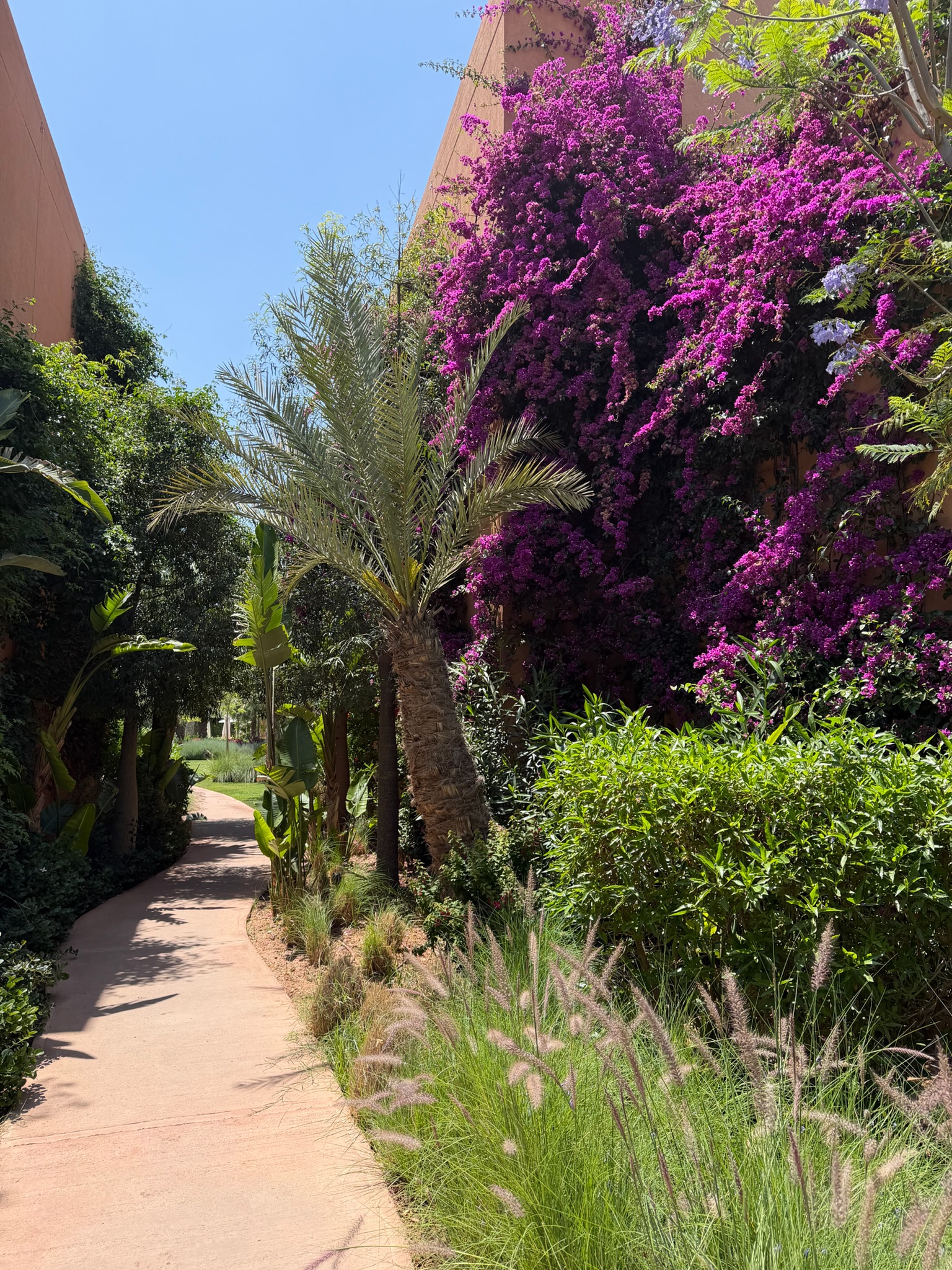
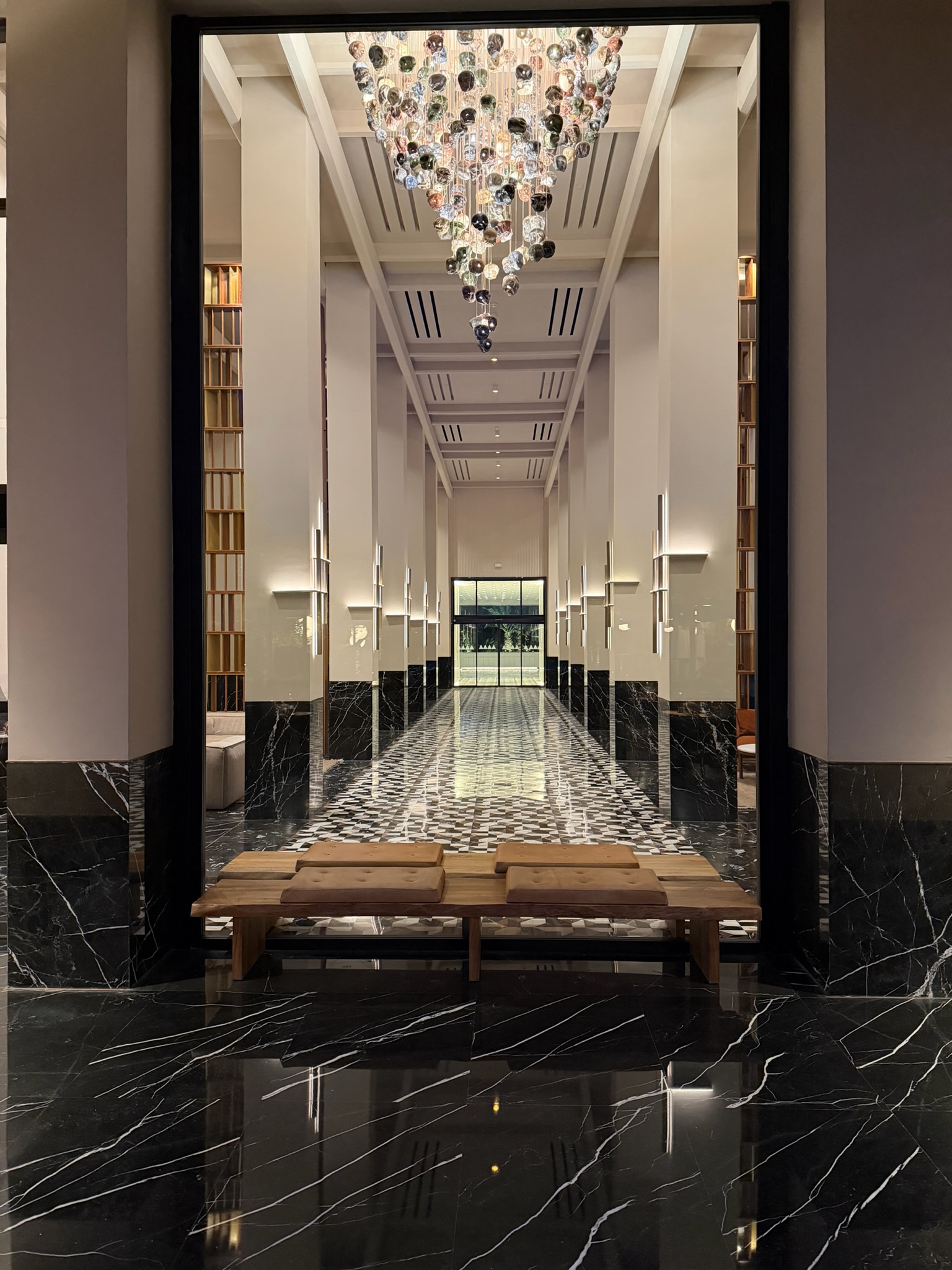
Tip for the road: If your budget allows, tacking on a night at a beautiful riad or resort at the end of the tour is a lovely way to transition back to real life. You'll want it.
Final Thoughts: Should You Go to Morocco?
Yes. Unequivocally yes.
Morocco is a country of extraordinary contrasts — Roman ruins and the Atlas mountains, blue medieval cities and French-influenced boulevards, ancient souks and lakeside resort hotels. It surprised us constantly, challenged our assumptions, and fed us extraordinarily well.
The G Adventures Northern Morocco itinerary is a well-constructed introduction to the country's northern half. The small group format — ours was just six people — means you move with agility, form real connections with fellow travelers, and access experiences like lunch in an Amazigh home that a larger tour simply couldn't offer. And if you're lucky enough to get Sophia as your CEO, you're in exceptionally good hands. She kept all six of us safe, healthy, and well-fed for nine days while quietly making history. We've already got her contact information saved for when we return.
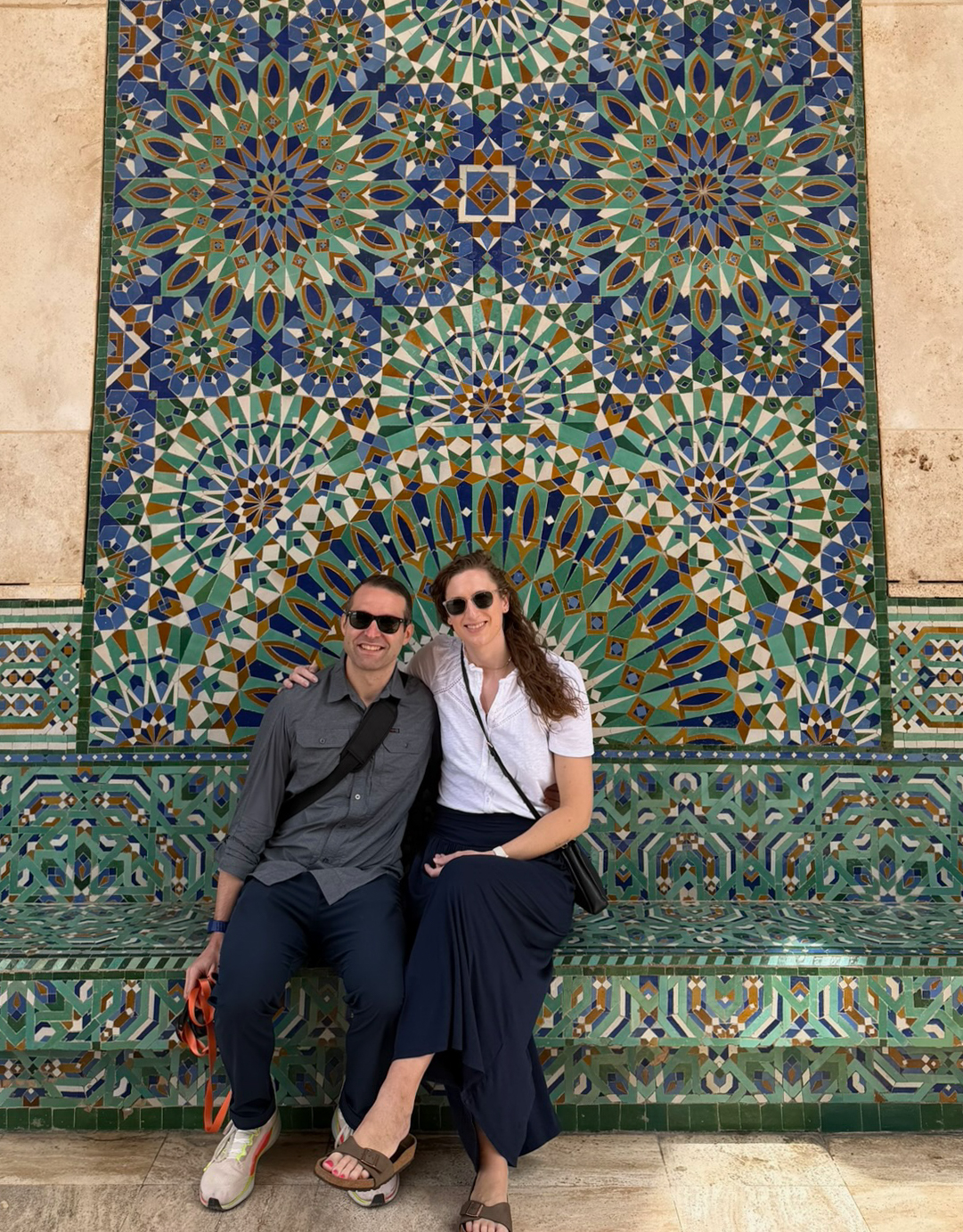
Was it our first trip to Africa? Yes. Will it be our last? Not a chance. We already have our next trip there booked for early 2027.